The Atharvaveda: the Veda
of daily life.
The fourth Veda is the Veda of everyday life. Beside hymns on time, breath and the frame of the universe, it keeps the prayers people said over a fever, a new house, a field at sowing, a quarrel in the family, a wedding and a funeral. Twenty books, 731 hymns and close to 6,000 verses.
The fourth
Veda.
Its name, its age, how it is arranged, and why historians prize it.
The name
Atharvan and Angiras were two ancient priestly families. The oldest name for this Veda is Atharvangirasah, "the Atharvans and Angirases". Tradition linked the first with healing and blessing rites and the second with rites against enemies and harm. Later texts also call it the Brahmaveda.
The fourth Veda
Early texts speak of a threefold knowledge: the Rig, Sama and Yajur Vedas. The Atharvaveda won its place more slowly. In the great sacrifices its expert, the Brahman priest, sits in silence, watches the whole rite and puts right any mistake.
How old it is
Its language is a little younger than most of the Rigveda, and scholars usually place the collection around 1200 to 1000 BCE. Some of its charms may preserve folk practice much older than the collection itself.
How it is arranged
Books 1 to 7 hold short hymns, grouped mostly by length. Books 8 to 12 hold long hymns on many subjects. Books 13 to 18 each keep to one theme. Books 19 and 20 are later additions. About a sixth is prose, and roughly 1,200 verses are shared with the Rigveda.
Two versions survive
The text here is the Shaunaka recension, the one most widely recited. A second, the Paippalada, survived in a single birch-bark manuscript from Kashmir and, as was found in the twentieth century, in palm-leaf manuscripts and a living reciting tradition in Odisha.
A window on daily life
No other Veda tells us so much about ordinary people: their illnesses and herbs, their crops, cattle and houses, love and marriage, rivalries, debts, dice, snakes, kings and village assemblies. Historians of medicine, society and religion all draw on it.
A prayer for
every need.
Scholars sort the hymns by purpose. Most fall into these eight groups.
Healing
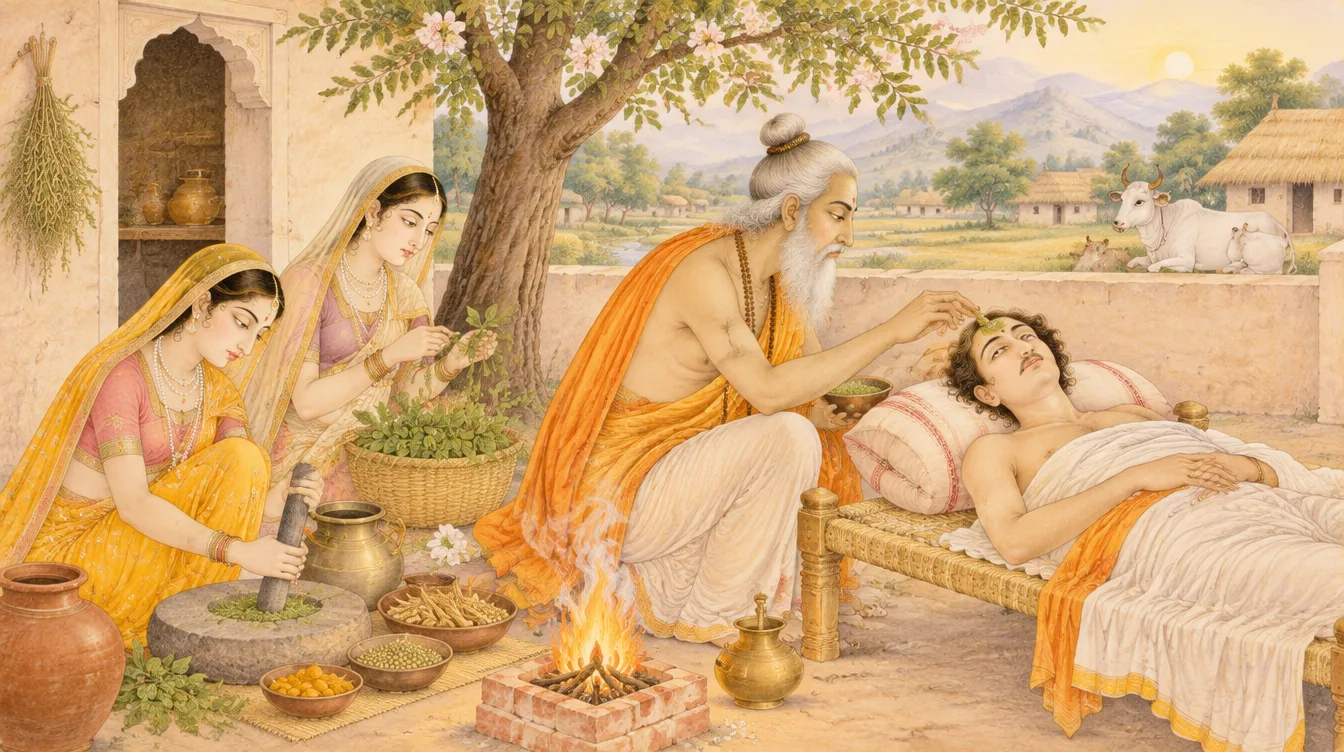
Charms against fever, cough, worms, wounds, poison and skin disease, many naming herbs. Fever (takman) is described in surprising detail.
Long life
Prayers for a full hundred autumns, said at a child's first haircut, at the sacred thread and for the sick.
Protection
Amulets and rites against demons, sorcery, bad dreams and the ill will of rivals.
Love and family
Hymns for winning a partner, for a safe birth, for children and for harmony between husband and wife.
Harmony
Hymns for concord in the household and the village, and for success in the assembly.
Kingship
Rites for choosing, consecrating and restoring a king, and for victory in battle.
Prosperity
Prayers for rain, good harvests, healthy cattle, a sound house and success in trade.
The great questions
Hymns on time, breath, the earth, the cosmic pillar and the Vedic student, which point ahead to the Upanishads.
Book by book.
Each book has a short guide and its complete text: the Sanskrit beside Ralph Griffith's English, hymn by hymn and verse by verse.
Short charms
Hymns of about four verses: healing, waters, protection and a prayer to remember what one learns.
Read book 1 →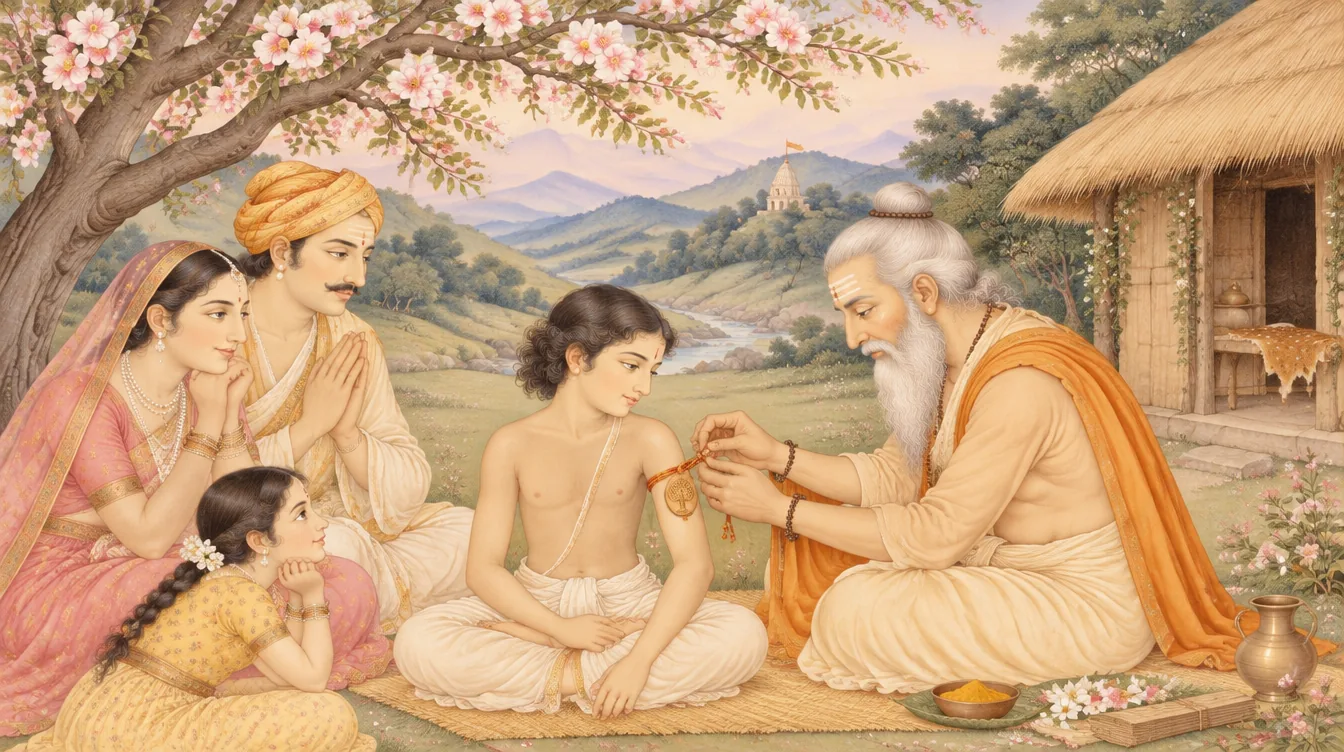
Amulets and long life
Hymns of about five verses: amulets, long life, worms and demons, and the mystic Vena.
Read book 2 →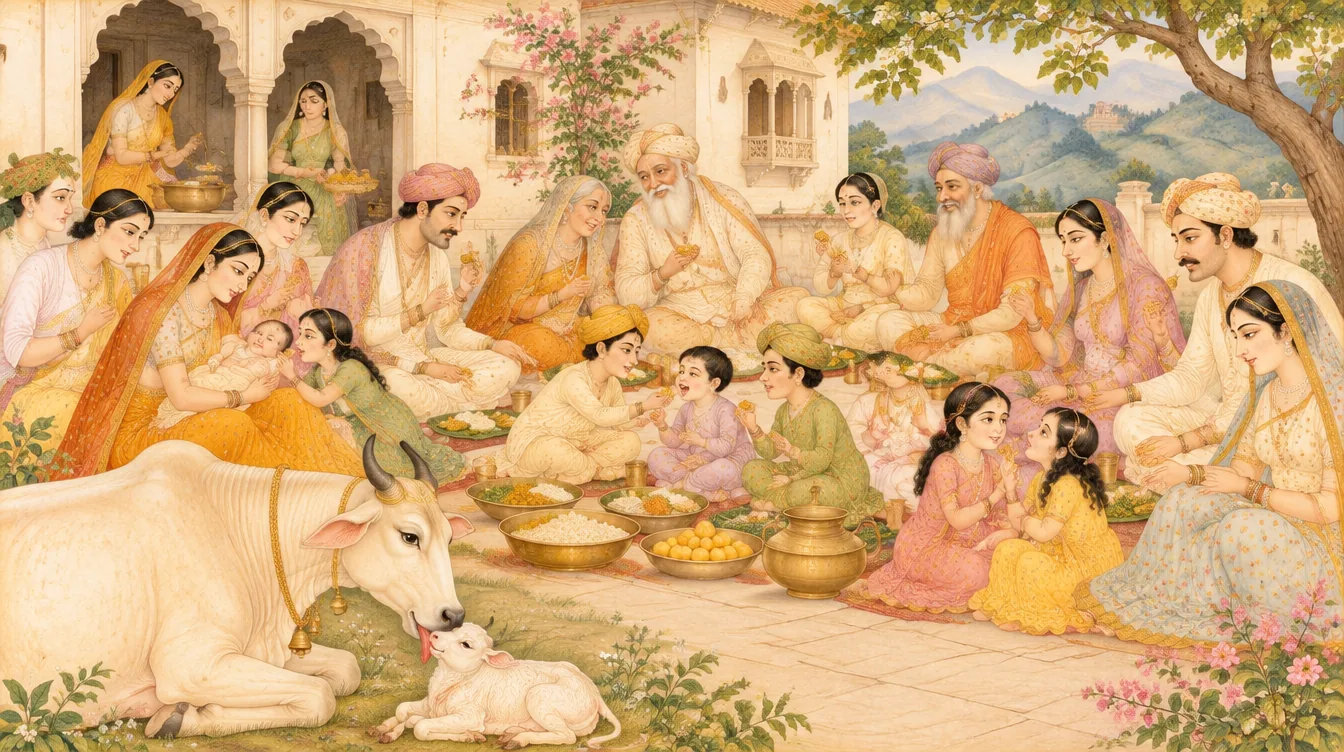
House, field and harmony
Hymns of about six verses: a king's return, building a house, ploughing and family concord.
Read book 3 →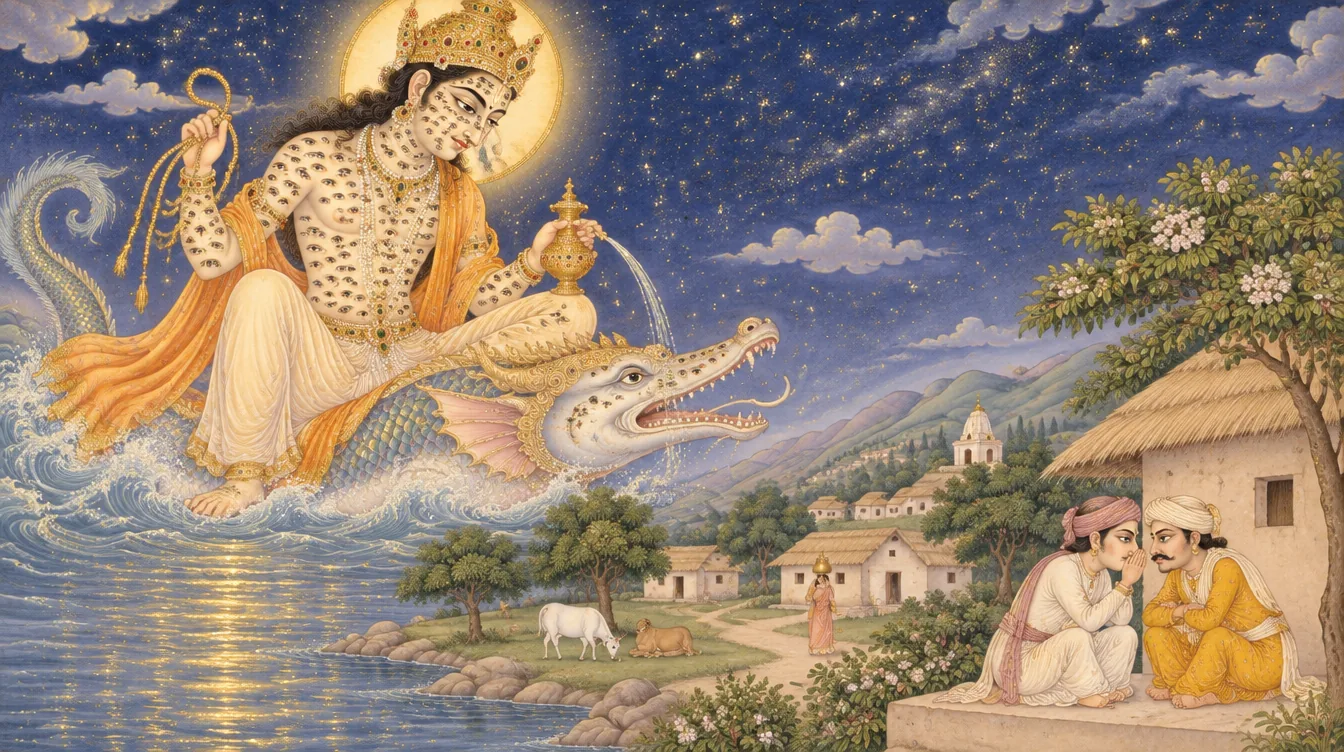
Varuna who sees all
Hymns of about seven verses, including the famous hymn on Varuna's watchful eye.
Read book 4 →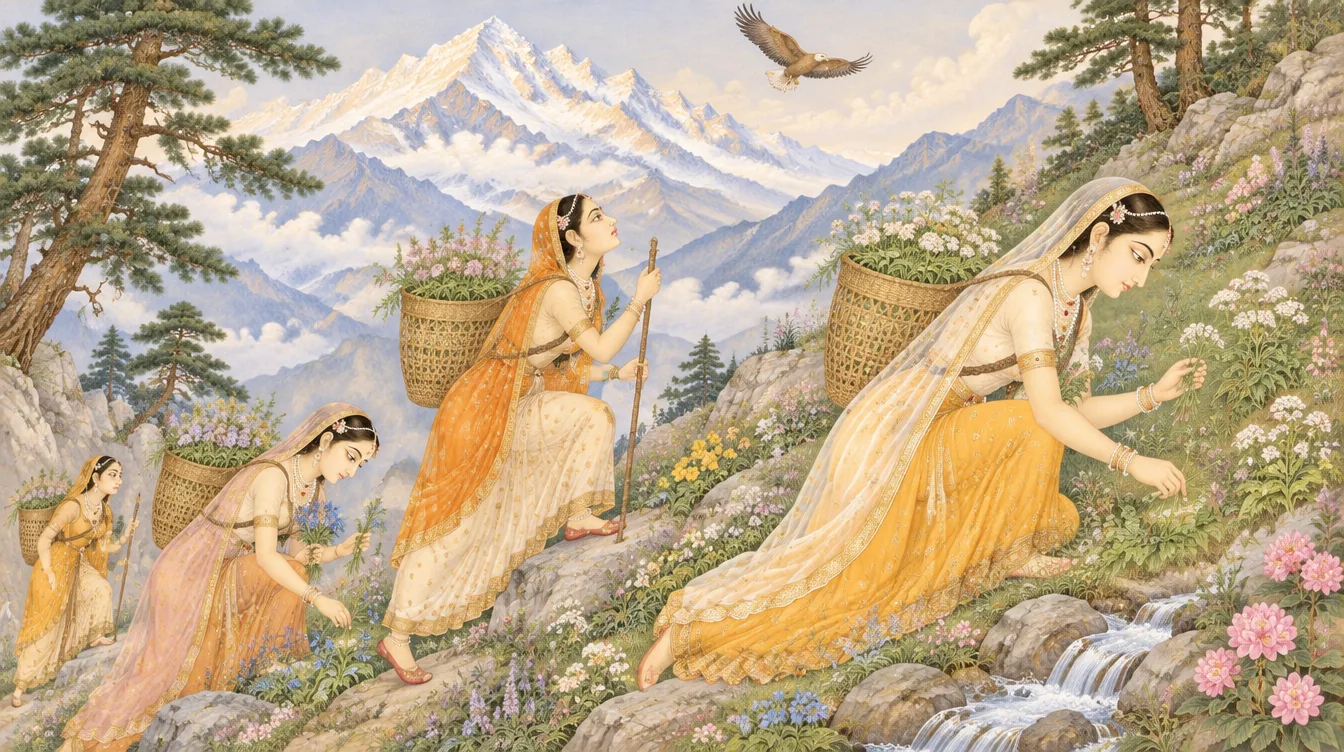
Herbs and fever
Longer hymns of eight to eighteen verses: the Kushtha herb, fever and the Brahmin's rights.
Read book 5 →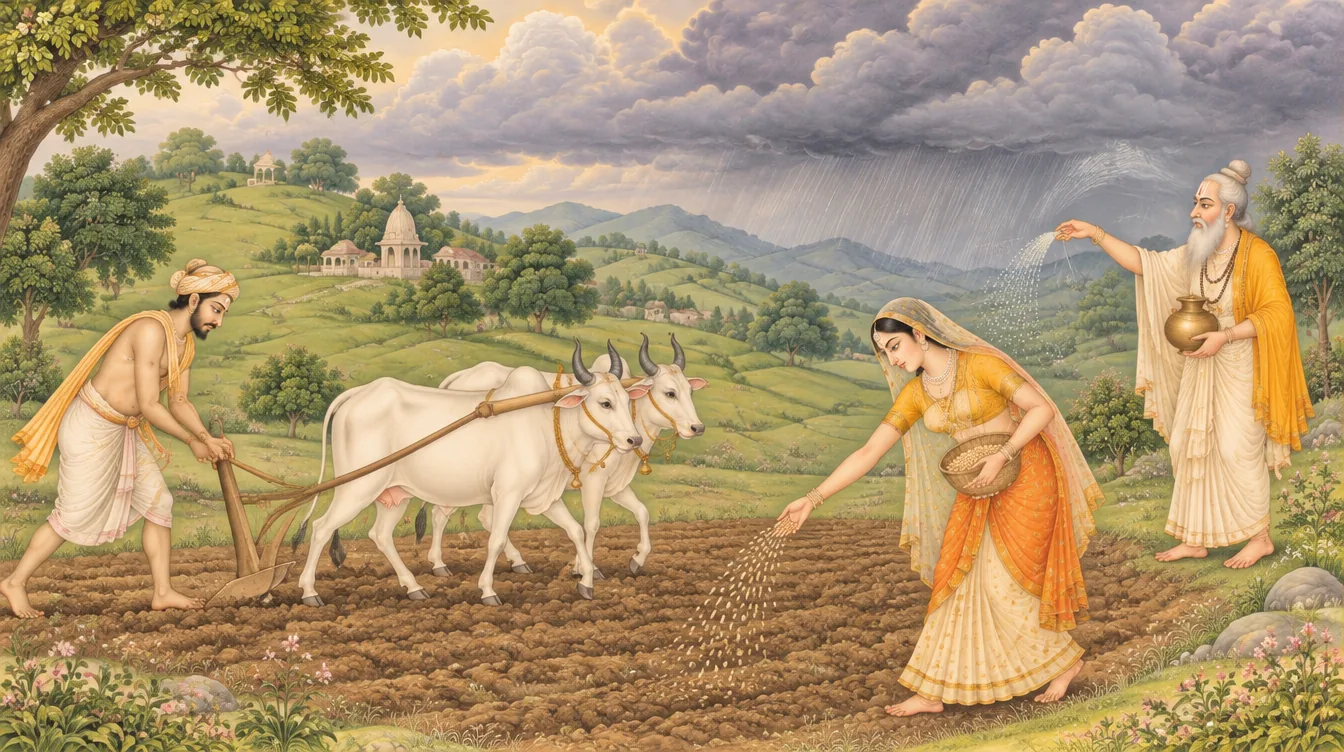
Many small charms
142 hymns of three verses: crops, cattle, love, quarrels, debts and dreams.
Read book 6 →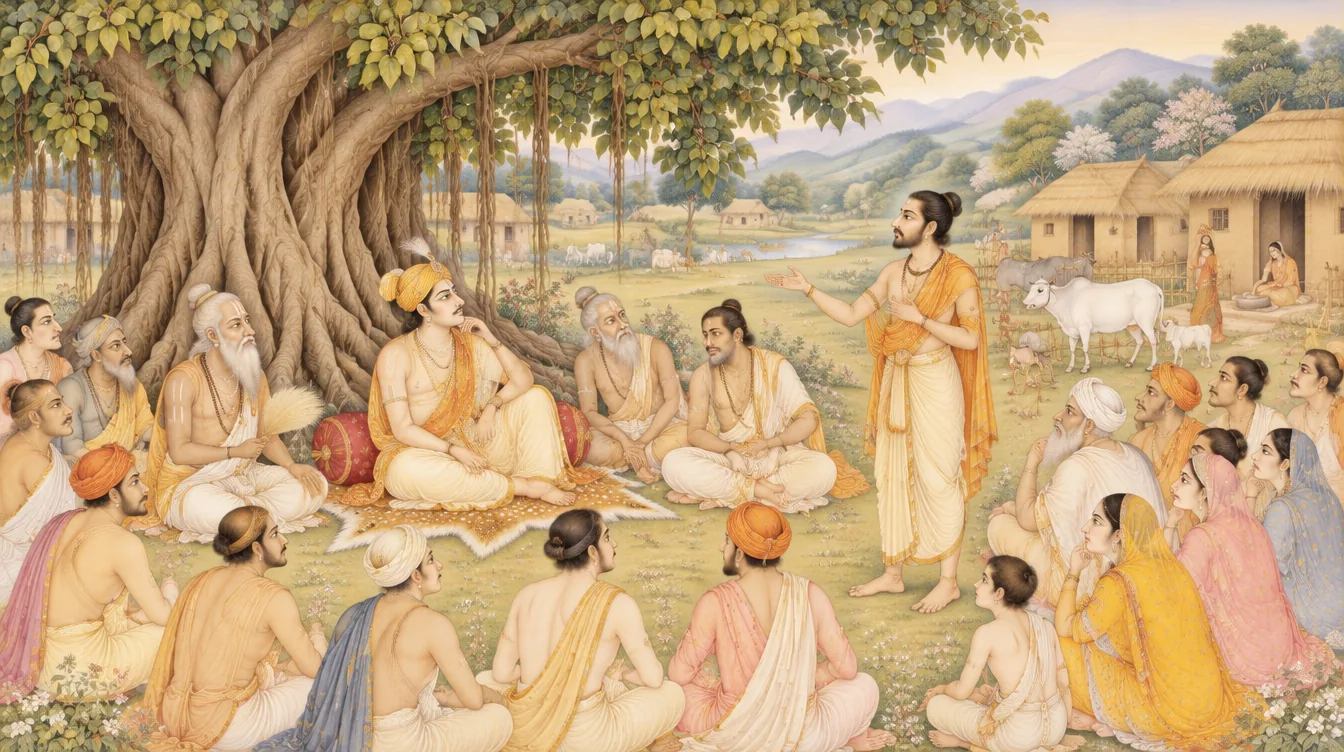
Assembly and blessing
118 very short hymns, many of one or two verses, including the hymn to the assembly.
Read book 7 →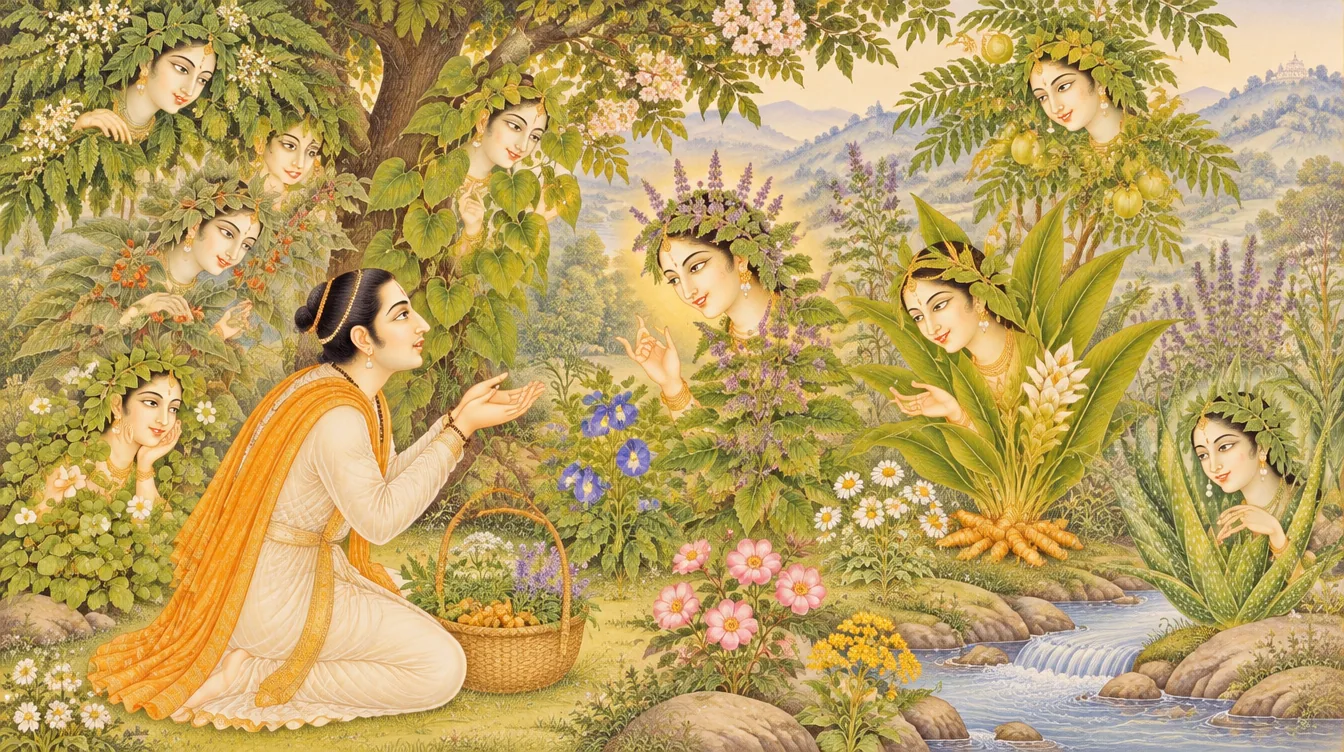
Life and the healing plants
Ten long hymns: prayers for long life, the hymn to the plants and the cosmic cow Viraj.
Read book 8 →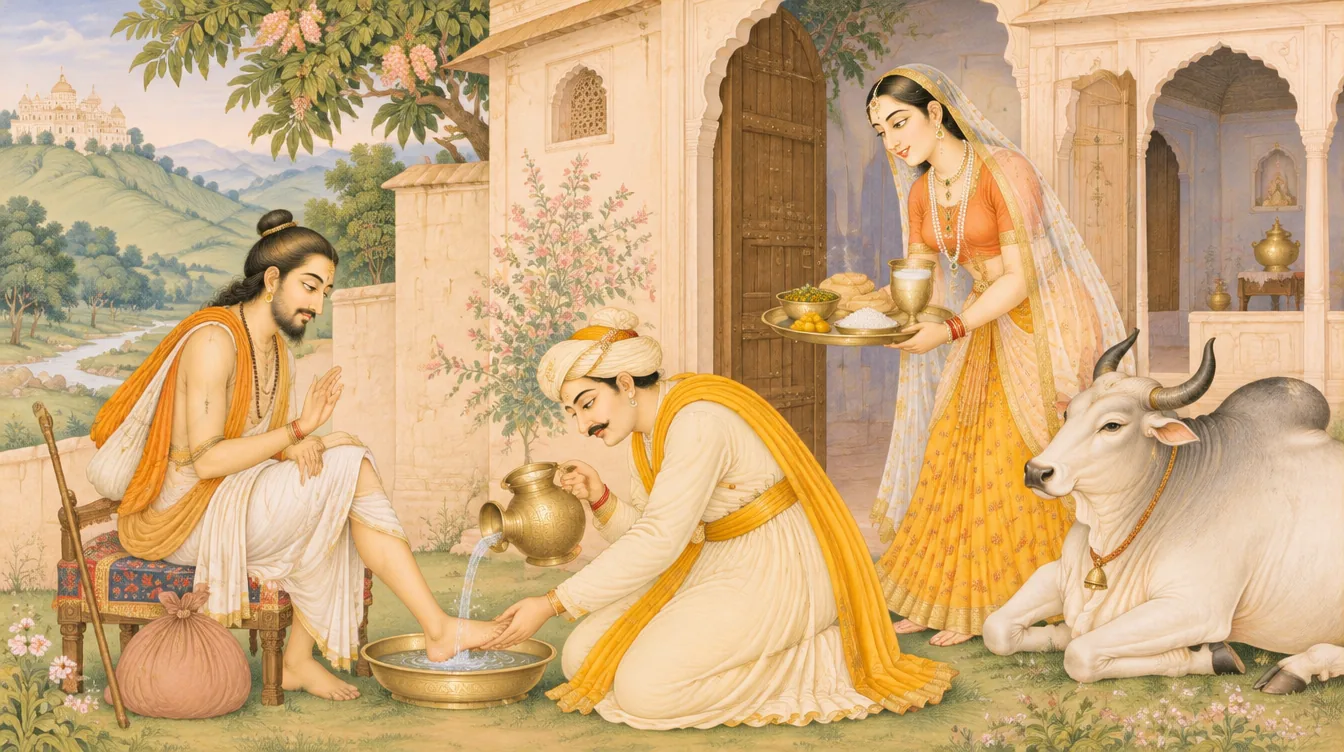
Honey, the bull and the guest
Ten long hymns: the honey whip, the bull, welcoming a guest and the great riddle hymn.
Read book 9 →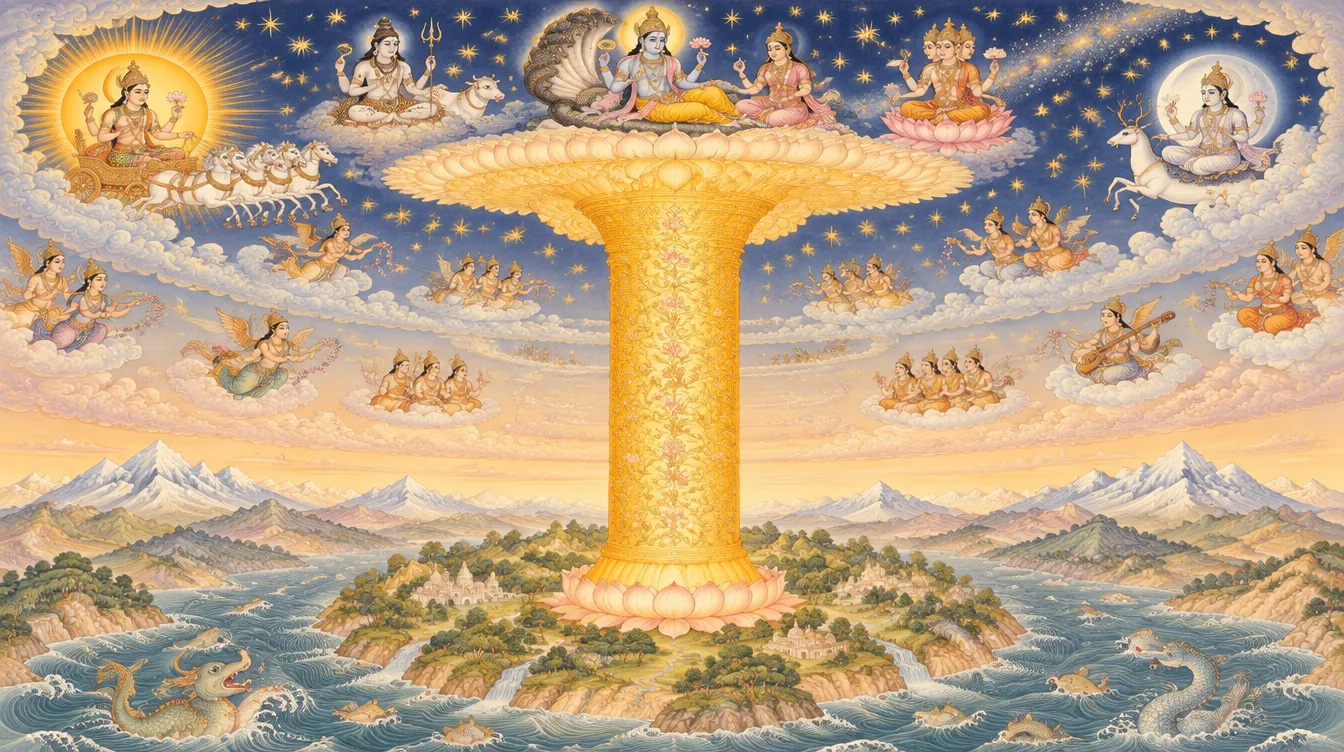
Skambha, the pillar
Ten long hymns: who made the human body, the cosmic pillar Skambha and the sacred cow.
Read book 10 →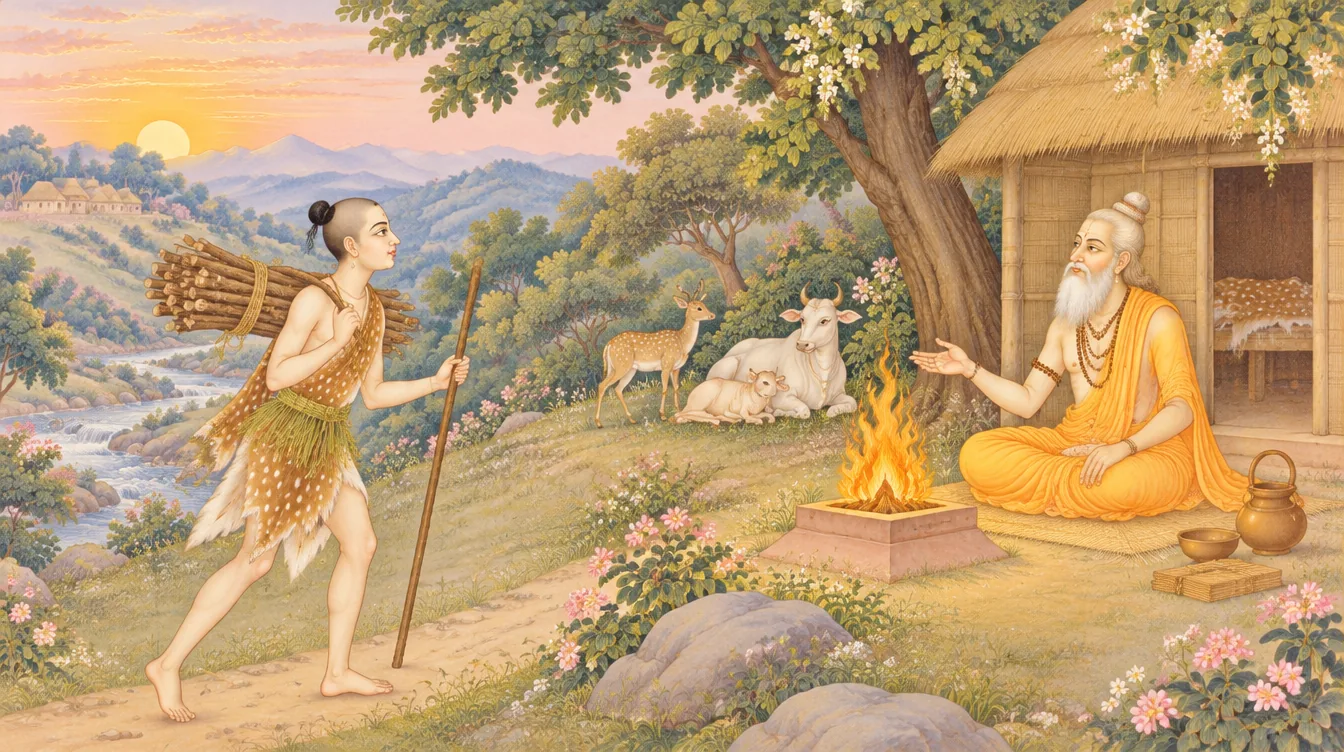
Breath and the student
Ten long hymns: breath as lord of all, the Vedic student, and the remainder of the sacrifice.
Read book 11 →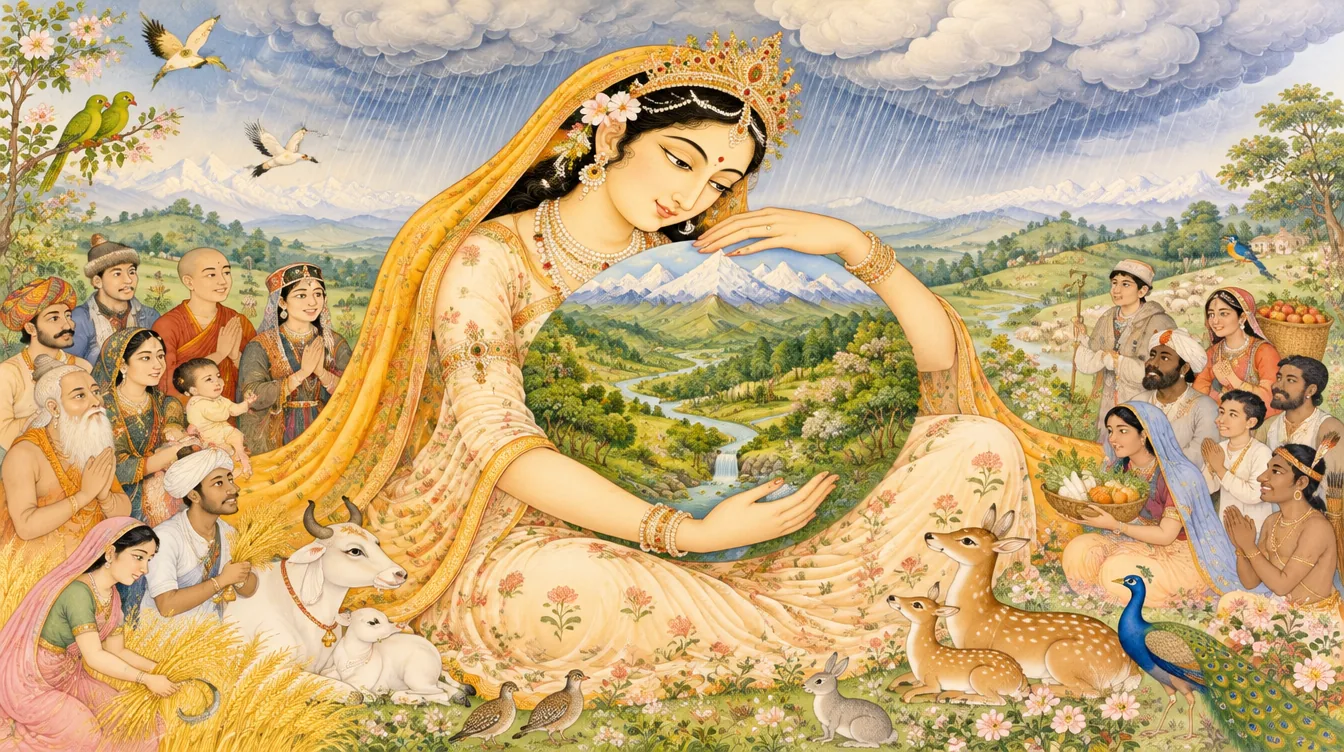
The Earth hymn
Five hymns, led by the 63 verses to Mother Earth.
Read book 12 →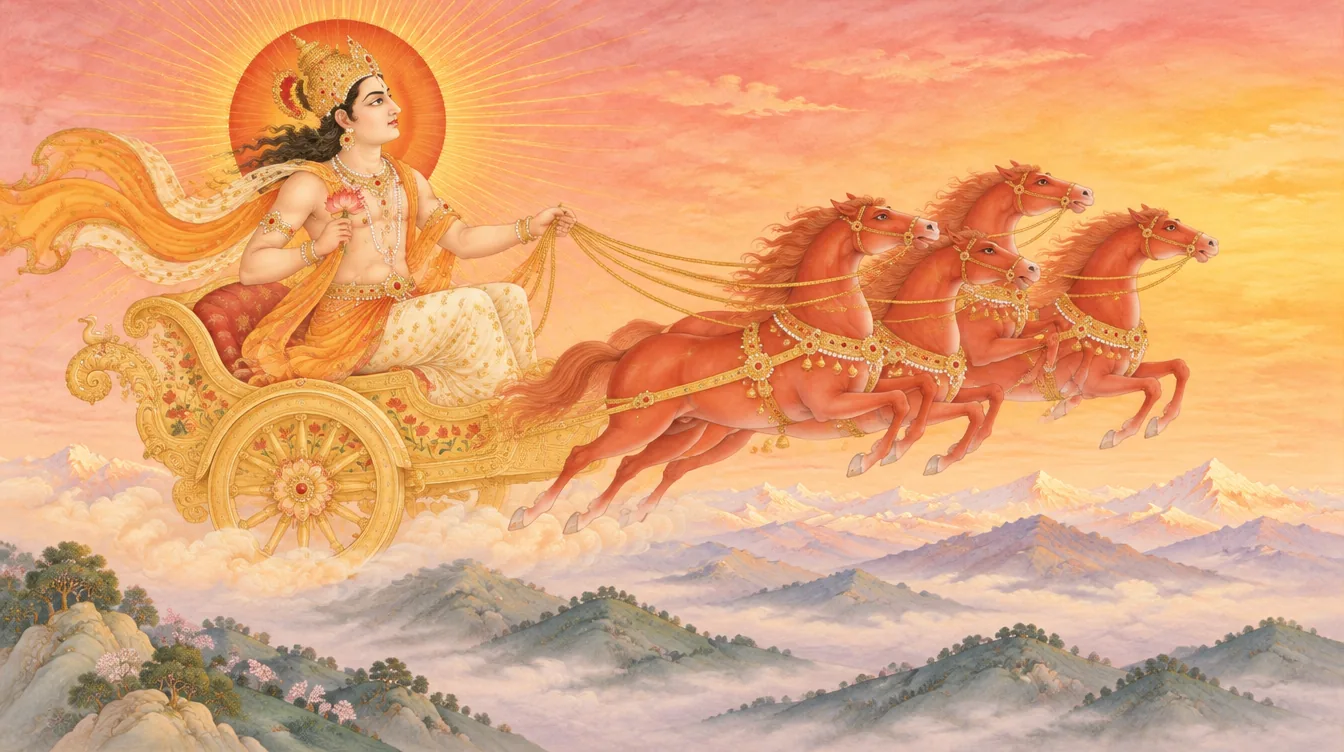
Rohita, the rising sun
Four hymns to Rohita, the red one, the rising sun and power of kingship.
Read book 13 →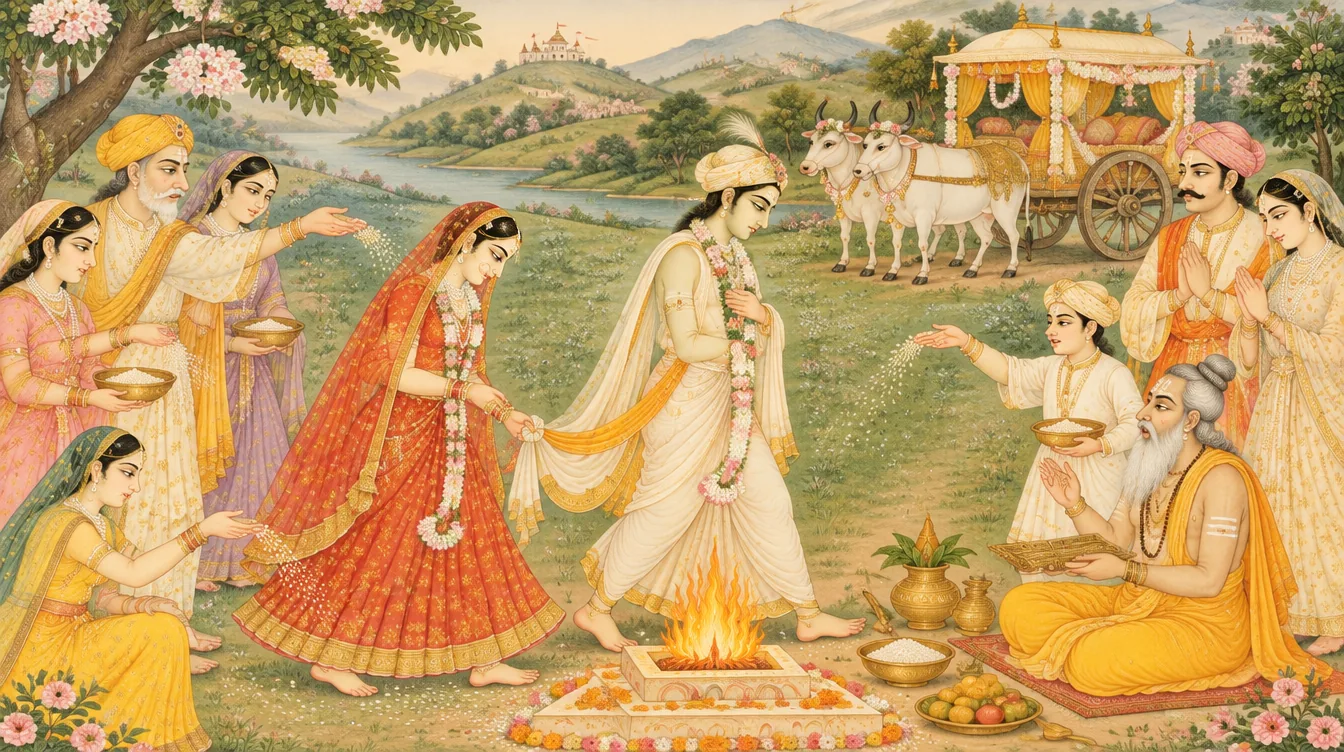
The wedding hymns
Two long hymns for a wedding, built on the marriage of Surya the sun's daughter.
Read book 14 →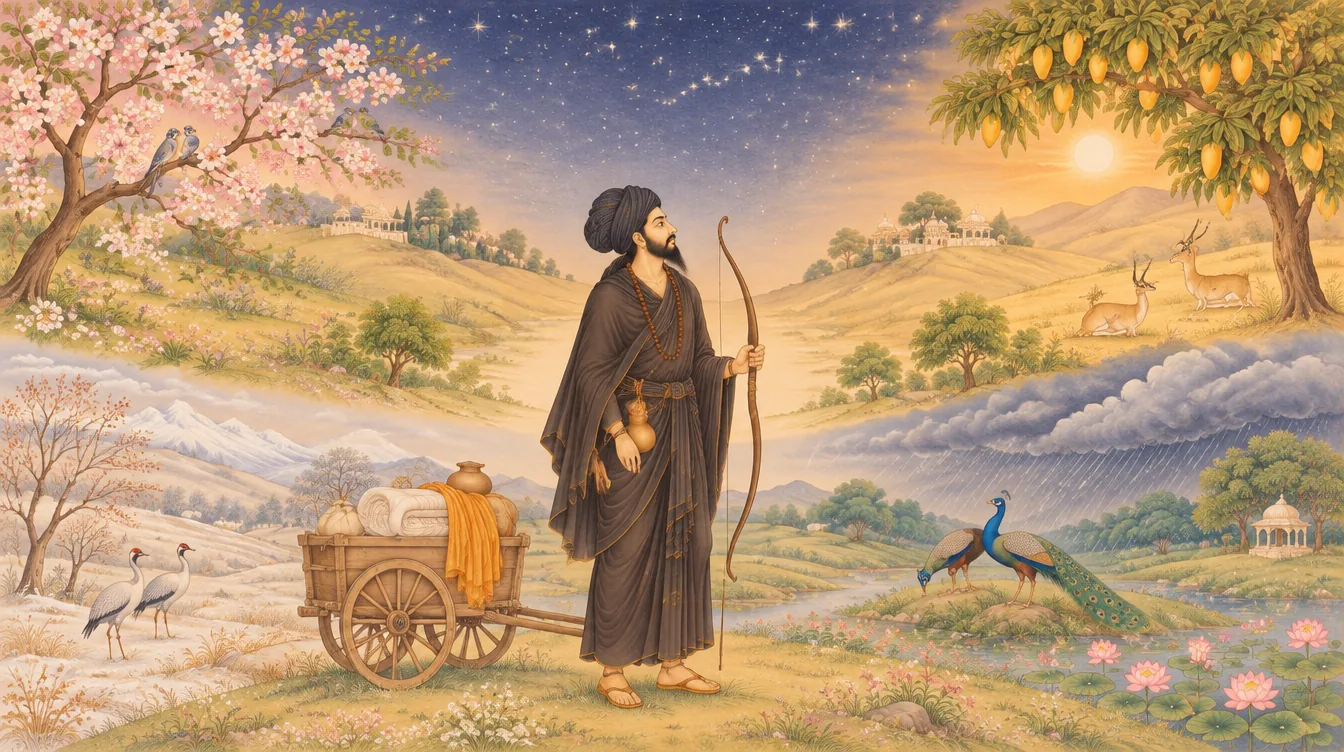
The Vratya
Prose on the Vratya, a wandering holy man who stands for a year and becomes the cosmos.
Read book 15 →
Waters and bad dreams
Prose formulas for purification by water and against evil dreams.
Read book 16 →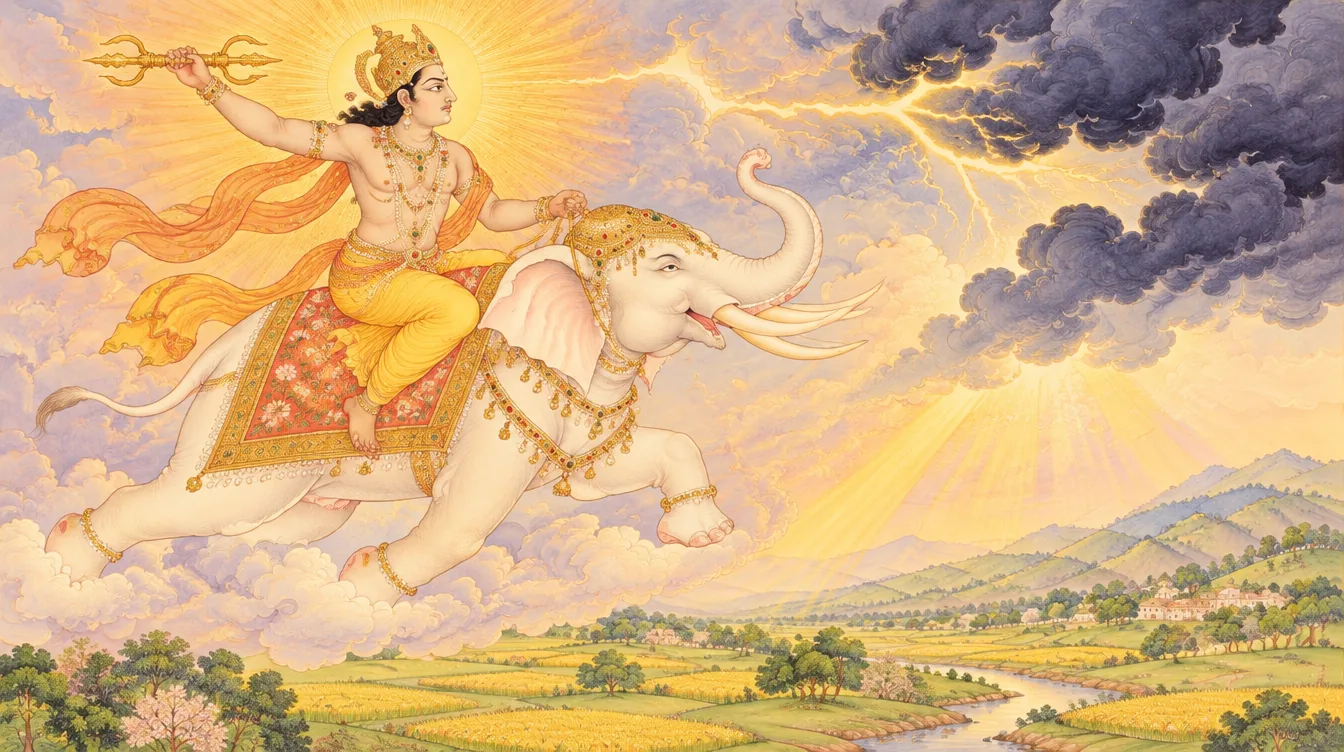
The conqueror
One hymn of 30 verses to Indra as the sun, the conqueror.
Read book 17 →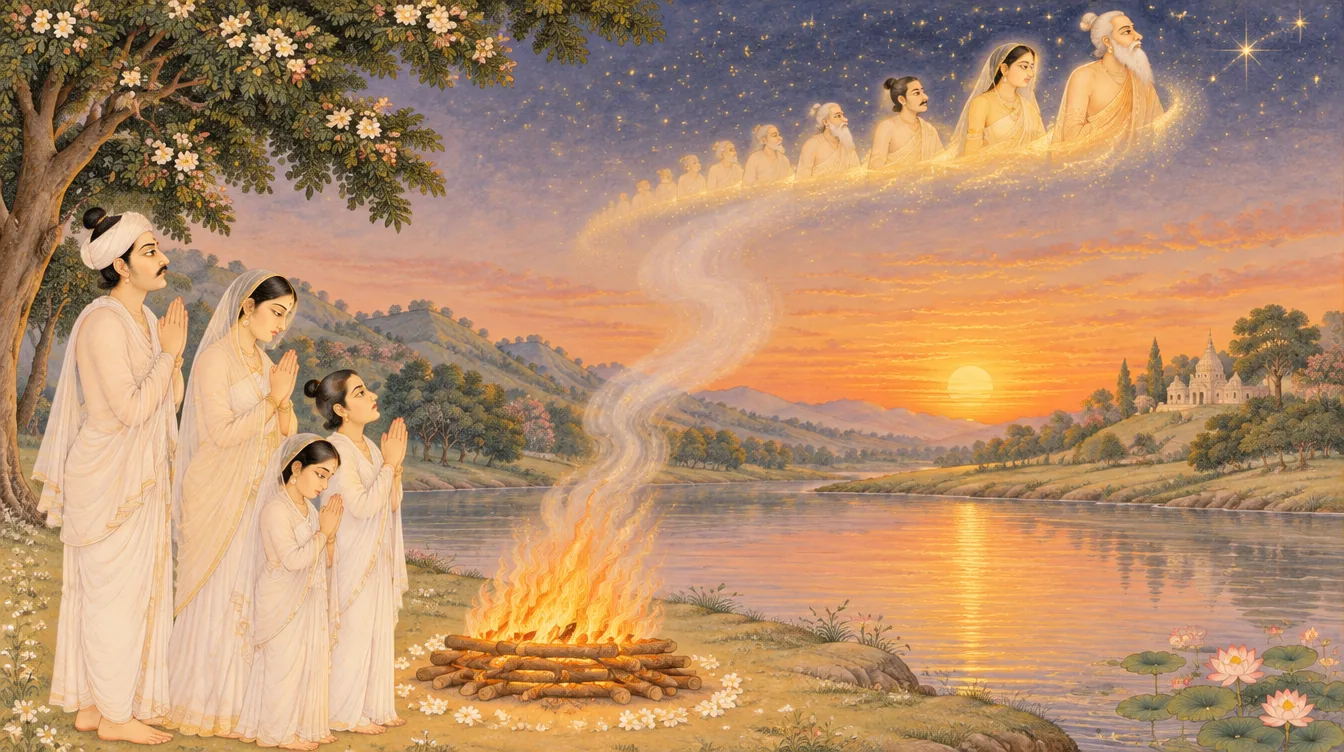
The funeral hymns
Four hymns for the dead: Yama, the fathers and the path to the ancestors.
Read book 18 →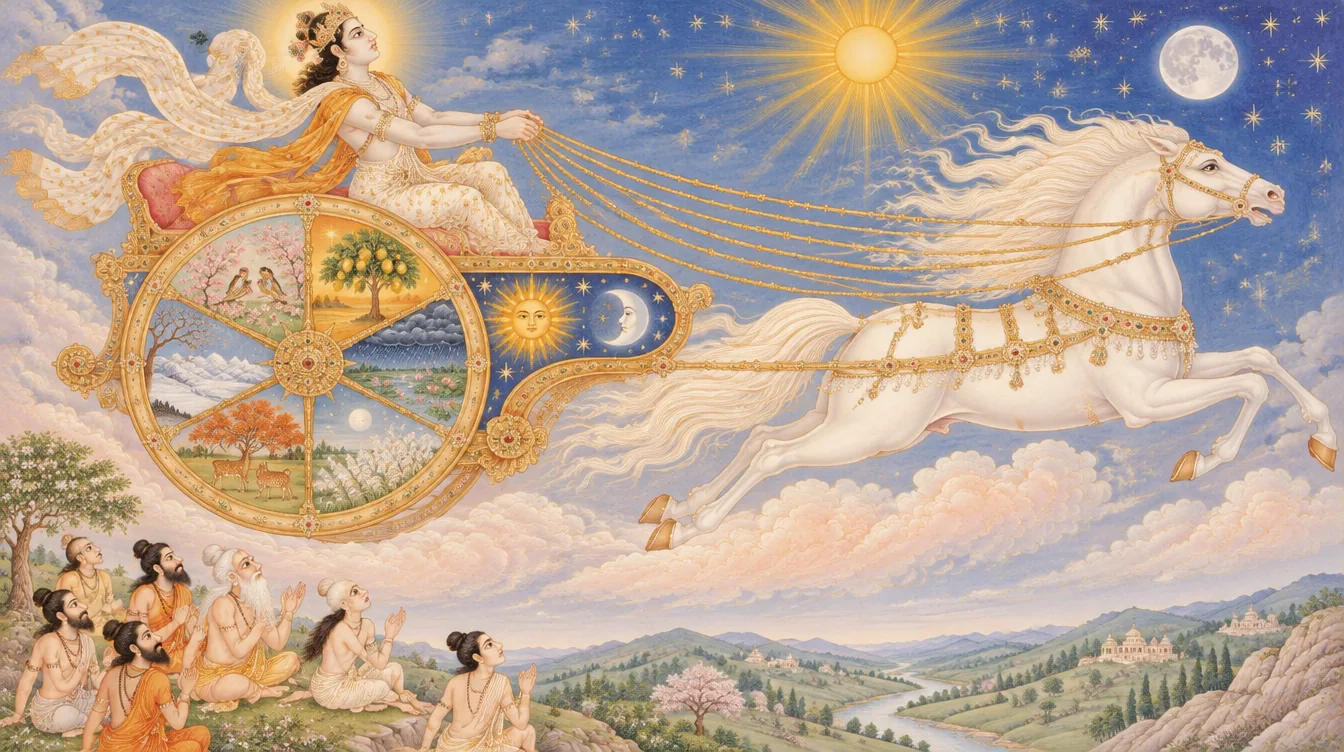
Time and the stars
A later supplement: the hymns to Time, the lunar mansions and prayers for peace.
Read book 19 →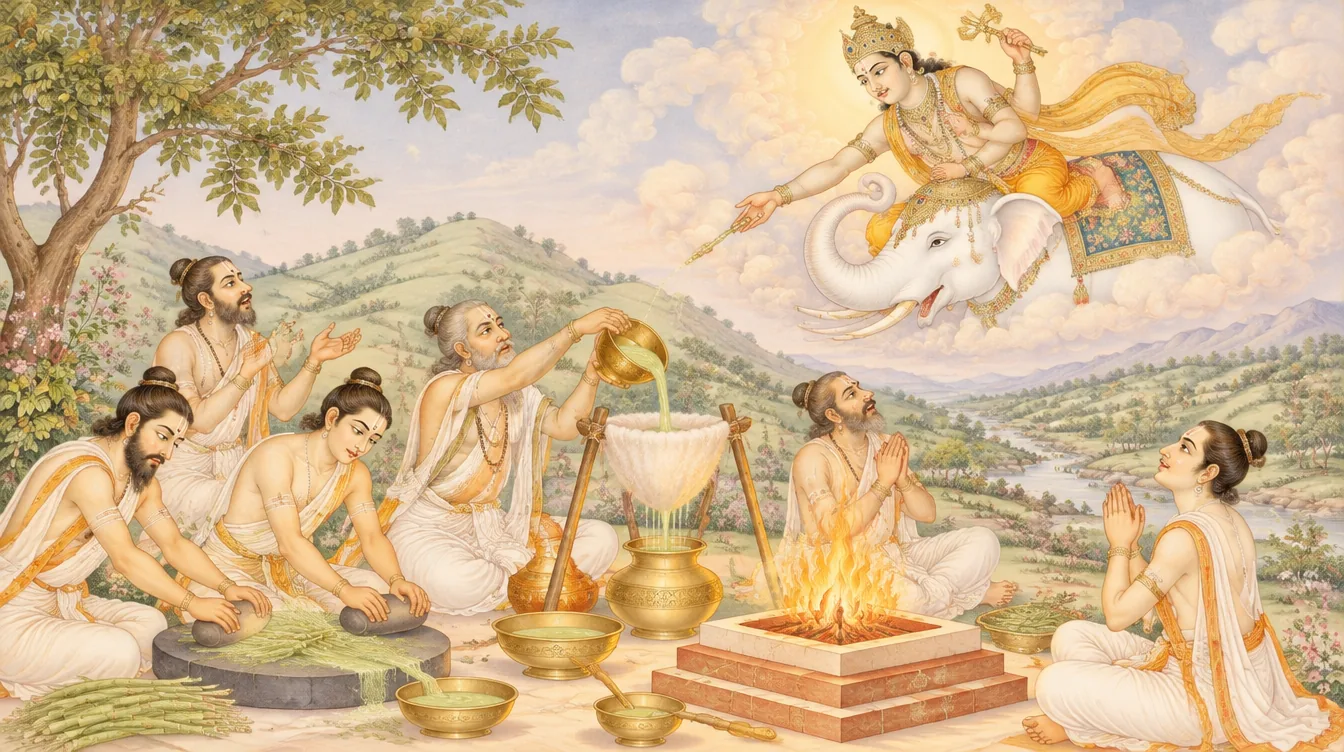
Soma and Indra
143 hymns for the Soma rite, mostly from the Rigveda, plus the unique Kuntapa hymns.
Read book 20 →Ten places
to start.
The hymns most often quoted, each one click from its full text.
The Earth is my mother
Sixty-three verses to the earth and all who live on her.
Read it →Hymn 4.16Varuna is the third
When two whisper together, the king of order hears.
Read it →Hymn 3.30One heart, one mind
A prayer for a family without hatred.
Read it →Hymn 11.5The Vedic student
The student who carries fuel to his teacher upholds the worlds.
Read it →Hymn 10.7Skambha
What holds up earth, sky and time?
Read it →Hymn 19.53Time
A horse with seven reins and a thousand eyes.
Read it →Hymn 11.4Breath
Homage to Prana, lord of all that lives.
Read it →Hymn 8.7The healing plants
Speaking to the herbs that save the sick.
Read it →Hymn 14.1The wedding
The marriage of Surya, the sun's daughter.
Read it →Hymn 20.127King Parikshit
Praise of a Kuru king, among the oldest royal names in the Veda.
Read it →Read closely.
Sanskrit, transliteration and our own plain-language rendering.
The Earth is my mother, and I am her son. The rain cloud is my father: may he keep us whole.
I make you one in heart and one in mind, free of hatred. Love one another as a cow loves the calf just born to her.
Whatever two people say as they sit together in secret, King Varuna knows it, for he is there as the third.
Where the
Atharvaveda leads.
Medicine, philosophy and the schoolroom all trace part of their story to this Veda.
Ayurveda
Indian medicine looked back to the Atharvaveda. The Charaka Samhita tells the physician to declare devotion to it, because it deals with healing, long life and the rites that ward off death.
Holy books →Three Upanishads
The Prashna, Mundaka and Mandukya Upanishads belong to the Atharvaveda. The Mundaka even names the Atharvaveda among the "lower knowledge" that the highest knowledge goes beyond.
The Upanishads →The Vedic student
Hymn 11.5 is the fullest early picture of the Brahmacharin, the student who lives with his teacher. It is the scriptural seed of the gurukul.
Gurukul history →Three ways
into English.
The Atharvaveda has three classic English translations, all now in the public domain.
Ralph T. H. Griffith
A complete verse translation of all twenty books, readable and close to the order of the Sanskrit. It is the English used on these pages.
William Dwight Whitney
A strictly literal translation with full notes, finished after Whitney's death by Charles Lanman and published in the Harvard Oriental Series.
Maurice Bloomfield
Selected hymns grouped by purpose, with a long commentary on the rites, in the Sacred Books of the East.
Sources
About the texts here
The Sanskrit and Ralph T. H. Griffith's English translation (1895 to 1896, public domain) are reproduced from the sources credited on each book's page. Guide text and the short verse renderings above are our own. Illustrations are artist's impressions.