01
The king who served a cow
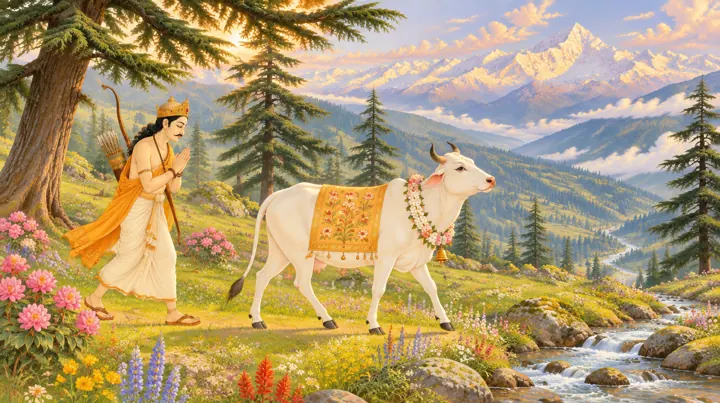
Childless King Dilip learns he once failed to honour the wish-granting cow Surabhi. For twenty-one days he follows her daughter Nandini through the Himalayan forest, grazing when she grazes and resting when she rests.
Kalidasa's epic follows the kings of Ayodhya across many generations: a childless king who serves a sacred cow, a son who gives away the world, a husband undone by a falling garland, the avatar Rama, and at last a pleasure-loving king whose line rests on a child not yet born.
Five minutes for the shape of the story. Then read the full storyline below, canto by canto.
Childless King Dilip learns he once failed to honour the wish-granting cow Surabhi. For twenty-one days he follows her daughter Nandini through the Himalayan forest, grazing when she grazes and resting when she rests.
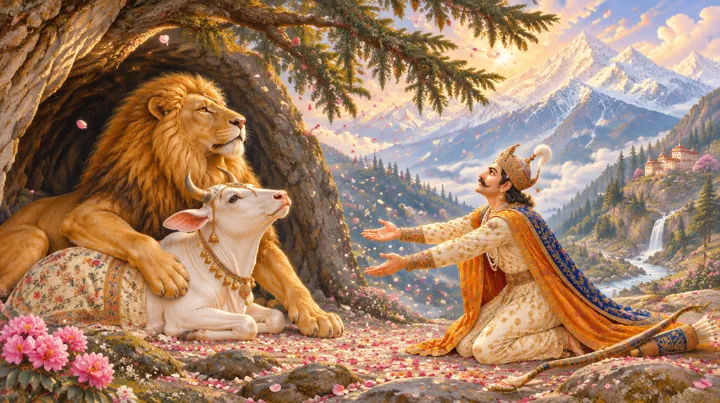
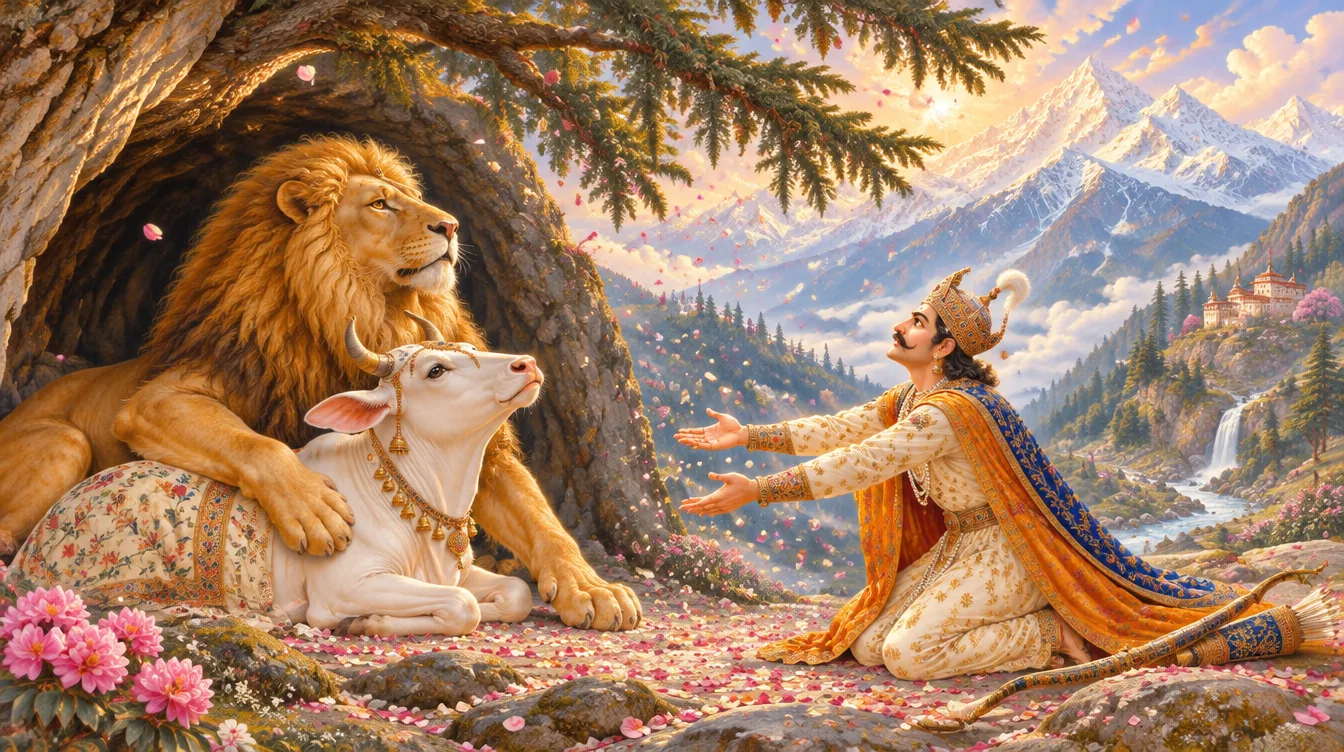
A lion seizes Nandini and Dilip's arrow freezes in his hand. He offers his own body instead. Flowers fall from the sky: the lion was a test, and Nandini grants him a son, Raghu.
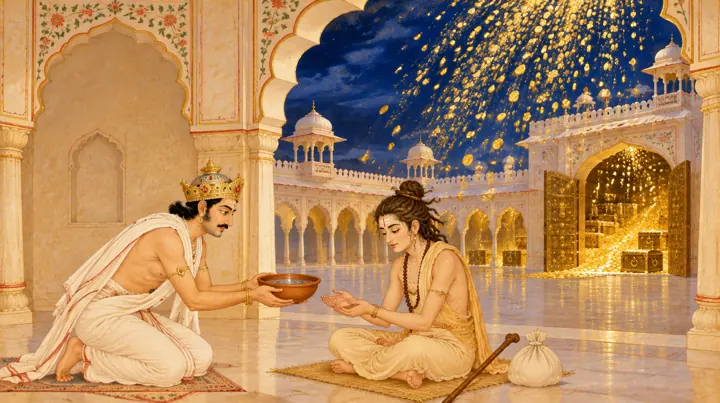
Raghu conquers the four quarters, then gives everything away in the Vishvajit sacrifice. When a student comes asking fourteen crore of gold for his teacher, Kubera rains gold into the treasury overnight.
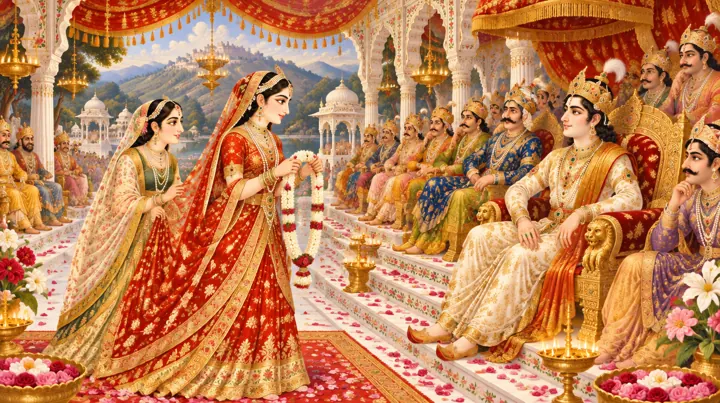
Raghu's son Aja wins a divine weapon from a cursed Gandharva and is chosen by Princess Indumati at her swayamvara, then spares the rival kings who ambush him.
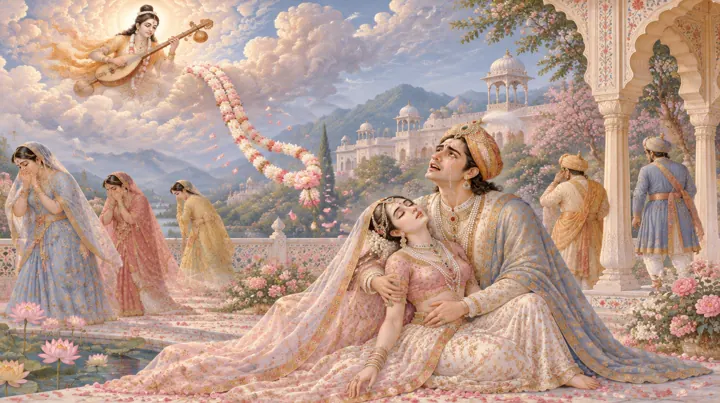
A celestial garland slips from the sage Narada's veena and Indumati dies at its touch. She was an apsara under a curse. Aja raises their son Dasharatha, then lets himself go.
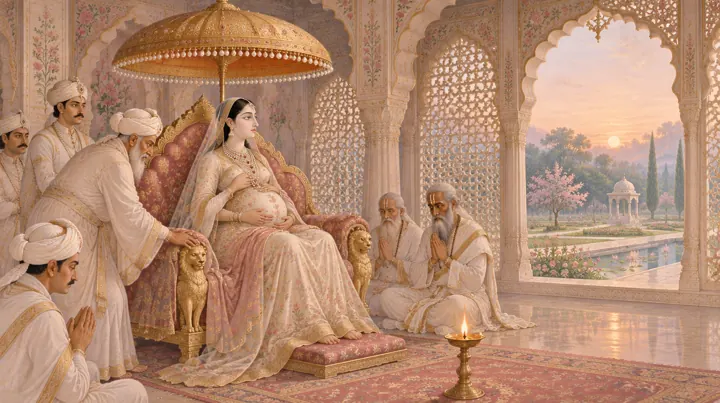
After Rama, Kusha restores a deserted Ayodhya and a long line of kings follows. The last, Agnivarna, lives for pleasure and dies of a wasting illness. The poem ends with his pregnant queen on the throne.
The kings of the poem in order. Choose a name to jump to the canto where their story begins.
Serves Nandini to end a curse of childlessness.
Canto 1 →2Conqueror of the quarters. The dynasty takes his name.
Canto 3 →3Chosen at a swayamvara. Dies of grief.
Canto 5 →4Cursed after a hunting accident.
Canto 9 →5Vishnu born as a prince. With Lakshmana, Bharata and Shatrughna.
Canto 10 →6Brings the people home to Ayodhya. Lava rules Shravasti.
Canto 16 →7The model of a just ruler.
Canto 17 →8Nishadha, Nala, Nabhas, Pundarika, Kshemadhanvan, Devanika, Ahinagu, Pariyatra, Shila, Unnabha, Vajranabha, Shankhana, Vyushitashva, Vishvasaha, Hiranyanabha, Kaushalya, Brahmishtha, Putra, Pushya, Dhruvasandhi, Sudarshana.
Canto 18 →9Lives for pleasure. Leaves only an unborn heir.
Canto 19 →For the right grasp of word and meaning, I bow to the parents of the world, Parvati and Parameshvara, joined as word and meaning are joined.
Where is the dynasty born of the sun, and where my small understanding? In my folly I want to cross the impassable ocean on a raft.
Sanskrit from the opening of Canto 1. English renderings are our own plain-language versions for readers, not quoted published translations.
A dynasty that descends from the sun has no heir. The cure turns out to be humility.
Kalidasa opens with a bow to Parvati and Shiva, joined to each other as a word is joined to its meaning. Then he admits his nerve: writing of a dynasty born from the sun with his small wit is like trying to cross the ocean on a raft.
The dynasty begins with Manu, and in time the throne of Ayodhya comes to Dilip: tall as a sal tree, learned, restrained, a king who taxed his people only to return the wealth to them, as the sun draws up water to give it back as rain. He has everything except a son.
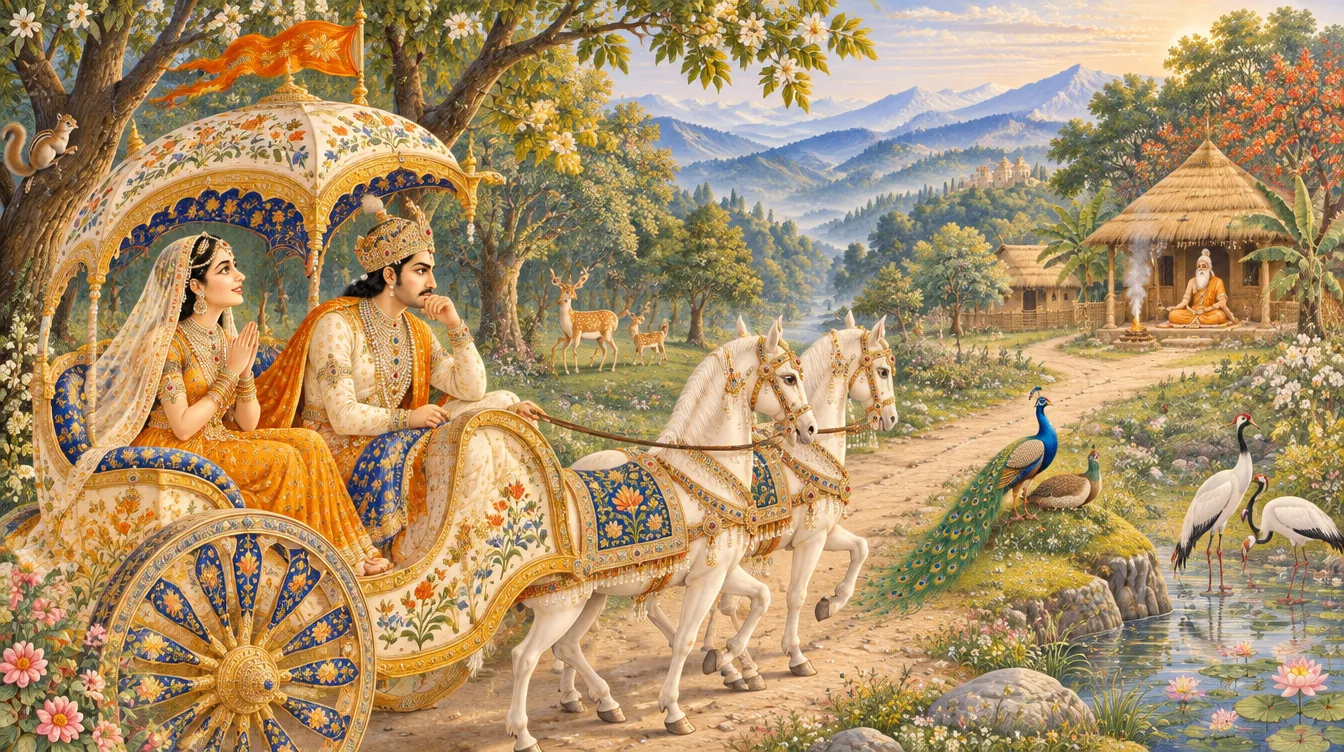
Dilip and his queen Sudakshina ride in a single chariot to the forest hermitage of their family preceptor, the sage Vasishtha. Vasishtha closes his eyes, sees the cause, and tells it. Years before, as Dilip returned from helping Indra in heaven, he passed Surabhi, the wish-granting cow, resting in the shade of the wish-granting tree. He was hurrying home to his queen and did not stop to honour her. Surabhi spoke a curse he never heard: no child until he served her offspring.
Surabhi herself has gone to the underworld to supply a sacrifice. But her daughter Nandini lives in the hermitage. Serve Nandini, says Vasishtha, and she will grant what her mother withheld.
At dawn the emperor lays aside his royal manner. He follows Nandini into the Himalayan foothills like a herdsman, scratching her neck, keeping flies away, stopping when she stops and drinking only when she has drunk. Sudakshina worships her morning and evening. This goes on for twenty-one days.
On the last day Nandini wanders into a cave and a lion leaps on her. Dilip reaches for an arrow and his hand sticks to it. The lion speaks: he is Kumbhodara, a servant of Shiva, posted to guard a deodar tree that Parvati raised like a son, and any creature that comes near is his food.
Dilip cannot bear to return to his teacher having lost the teacher's cow. He offers his own body instead and bows his head to wait for the spring. Instead, flowers rain from the sky. Nandini tells him the lion was an illusion she made to test him.
Pleased, she grants him a son. Back at the hermitage, with Vasishtha's leave, Dilip drinks her milk, and soon Sudakshina is with child.
Raghu grows into the king whose name the dynasty will carry. His greatness is measured by what he gives away.
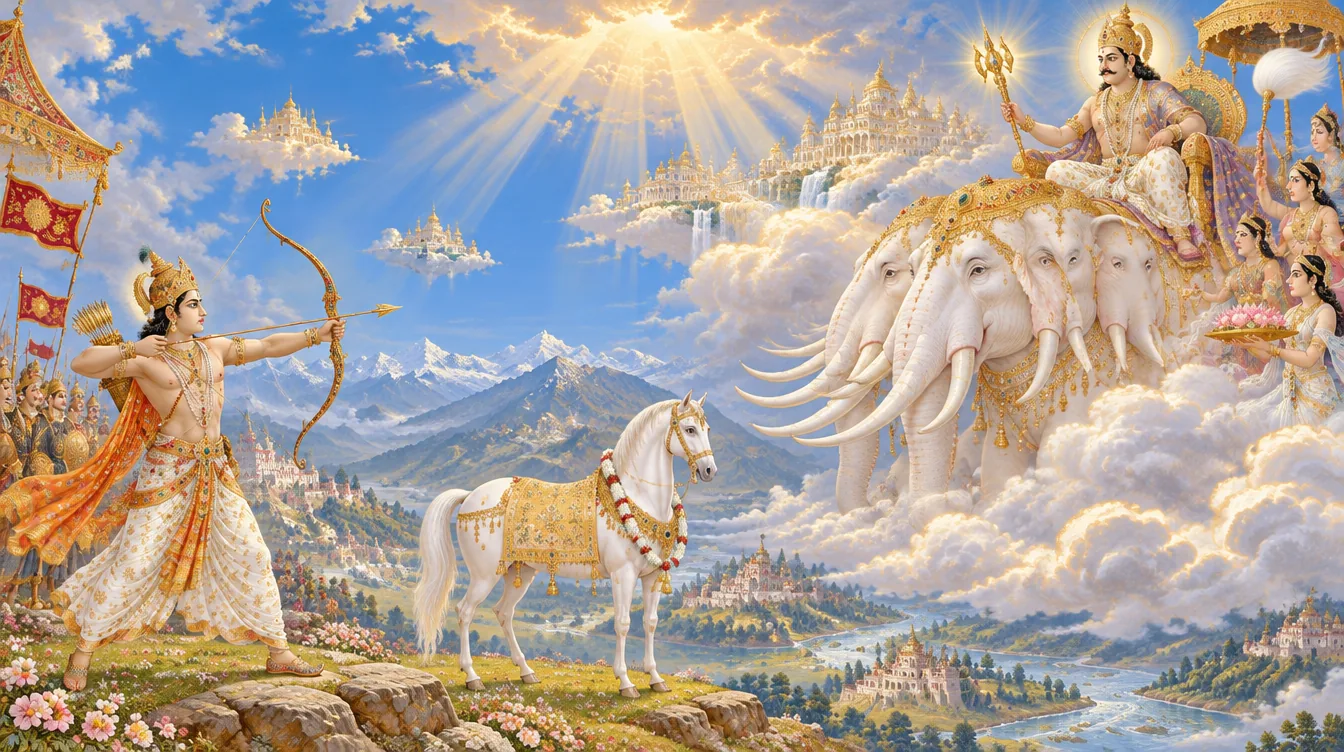
The son is born under fortunate stars and named Raghu, from a root that means to go: he will go to the far shore of learning and of battle. He studies, marries, and is made crown prince.
Dilip has completed ninety-nine horse sacrifices. During the hundredth, the sacrificial horse vanishes. Raghu washes his eyes with water from Nandini and sees the thief: Indra, king of the gods, who guards the title of the hundred sacrifices for himself.
Raghu challenges him. Indra's arrows and finally his thunderbolt strike the prince down, yet Raghu rises and fights on. Impressed, Indra offers any boon except the horse. Raghu asks that his father receive the full merit of the sacrifice anyway. Indra agrees.
Dilip crowns Raghu and retires with Sudakshina to the forest, as kings of this line do in old age.
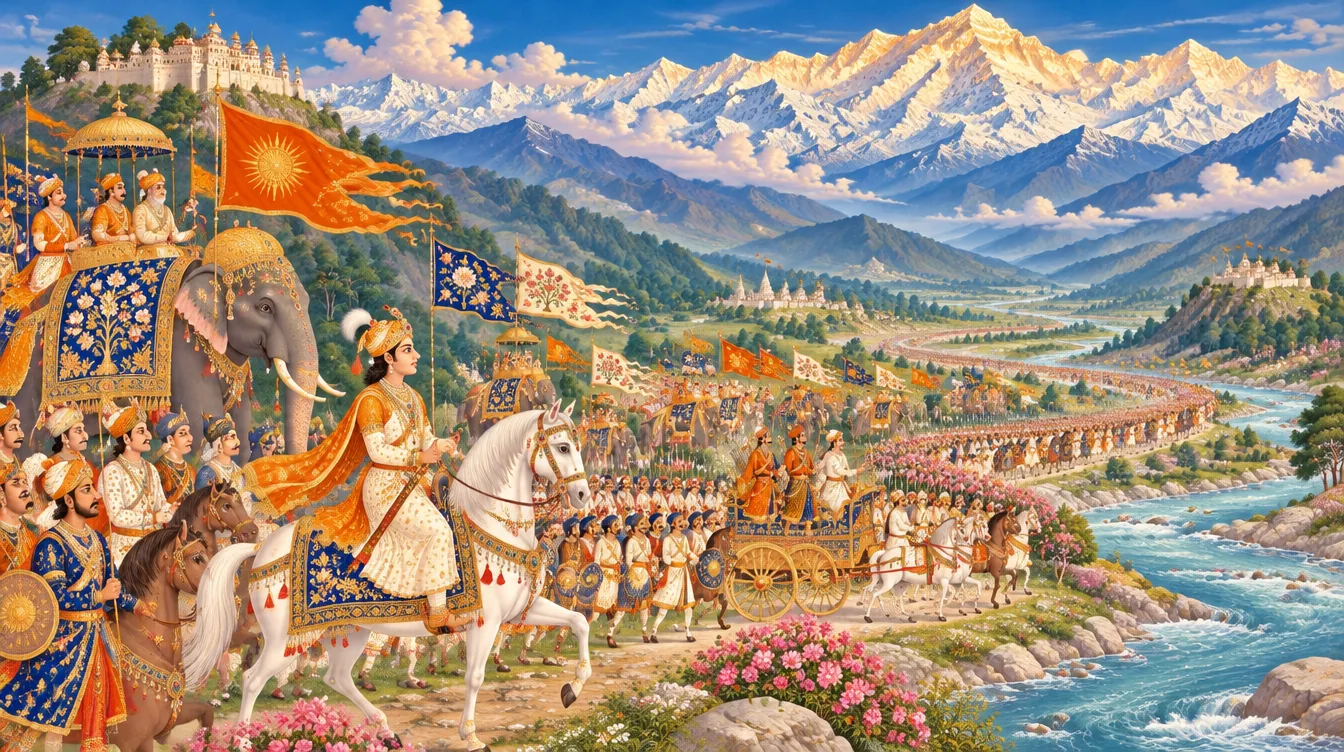
When autumn dries the roads, Raghu marches. Kalidasa turns the campaign into a tour of the whole known world, region by region, in the order the sun travels.
East he goes to the Suhmas and the Vangas of the river delta, planting pillars of victory on the islands of the Ganga, then on to Utkala and Kalinga. South he follows the Kaveri, and the Pandya kings bring him pearls. West he turns to the Kerala coast and the far western lands, and overland against the Parasikas. North, by the poem's account, he meets the Hunas, the Kambojas and the mountain peoples of the Himalaya. Then he crosses the Lauhitya river to Pragjyotisha and Kamarupa, whose king lays jewelled offerings at his feet.
He comes home and performs the Vishvajit, the conquest of everything, a sacrifice whose fee is the sacrificer's entire wealth. Raghu gives it all.
Choose a direction to follow Raghu's march.
A poetic circuit of the known world as Kalidasa describes it, not a campaign record or a scale map.
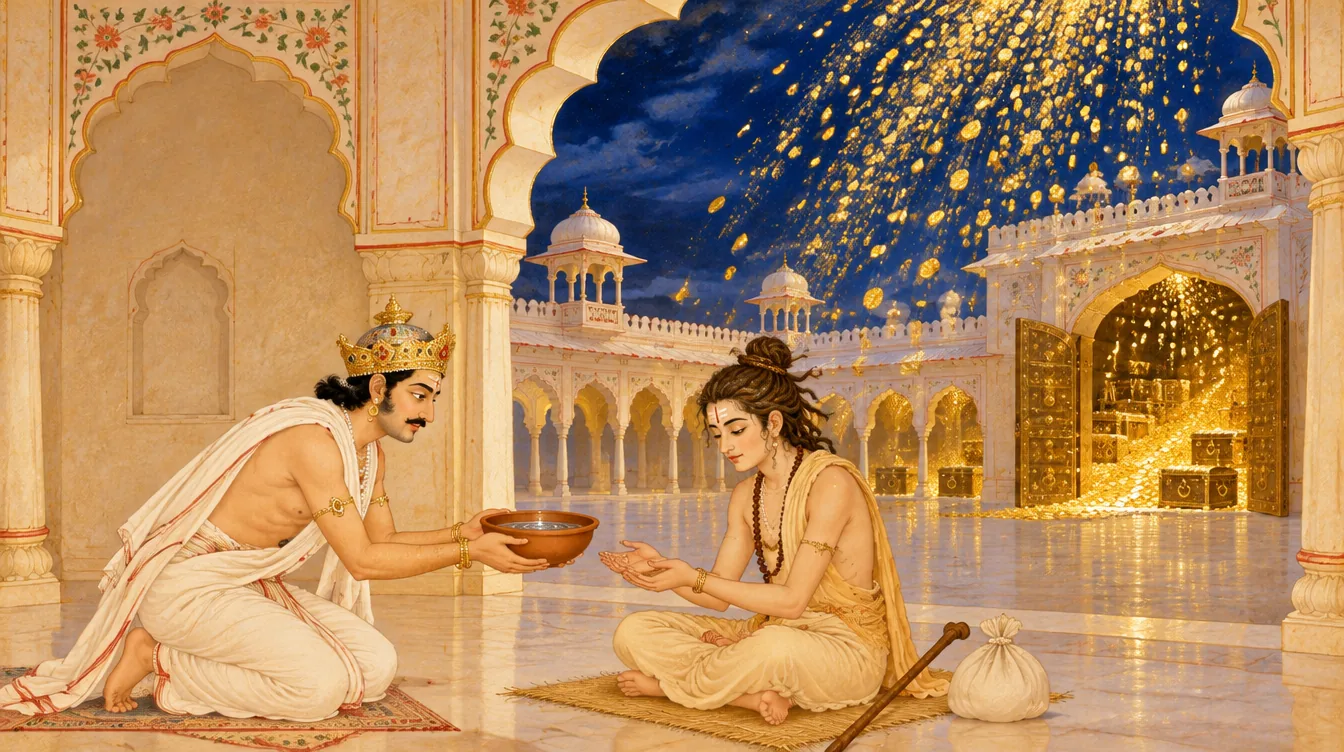
Now Raghu owns a clay bowl. A young scholar, Kautsa, arrives at the palace. He has finished his studies with the sage Varatantu and must pay his teacher's fee. Varatantu wanted nothing, but Kautsa insisted, and in irritation the teacher named fourteen crore of gold, one for each branch of learning.
Seeing the clay bowl, Kautsa turns to leave. Raghu stops him: no student will go away from his door empty-handed. He resolves to ride against Kubera, lord of wealth, in the morning. Before dawn his treasurers report that gold has rained into the treasury.
Raghu tries to give Kautsa the whole heap. Kautsa will take only what his teacher asked. The people of Ayodhya watch two men argue over who should have less. Kautsa leaves with a blessing: a son as worthy as the father.
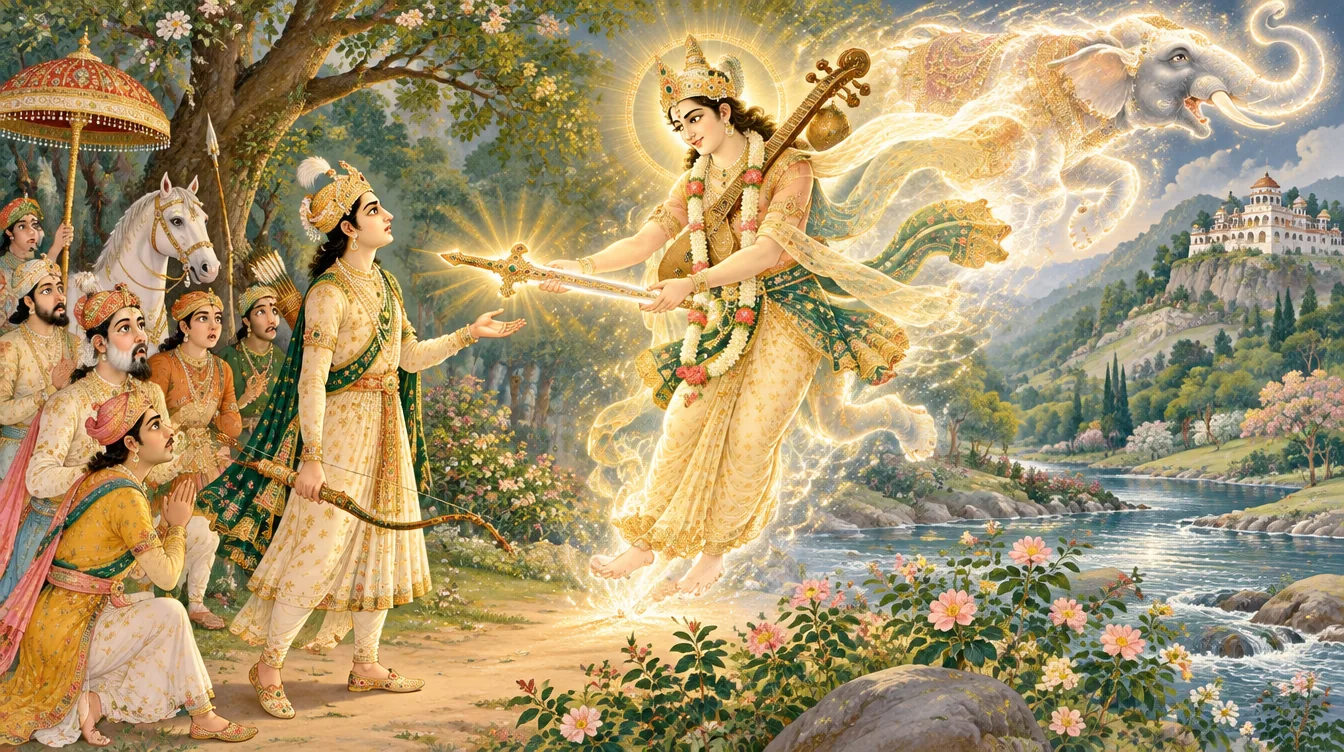
The son is Aja. Grown, he sets out for the swayamvara of Princess Indumati of Vidarbha. On the Narmada a wild elephant charges his camp. One arrow strikes it, and it turns into Priyamvada, a Gandharva cursed to that shape, who thanks him with the Sammohana, a weapon that puts armies to sleep.
Two garlands frame Aja's life: one that chooses him, and one that takes everything away.
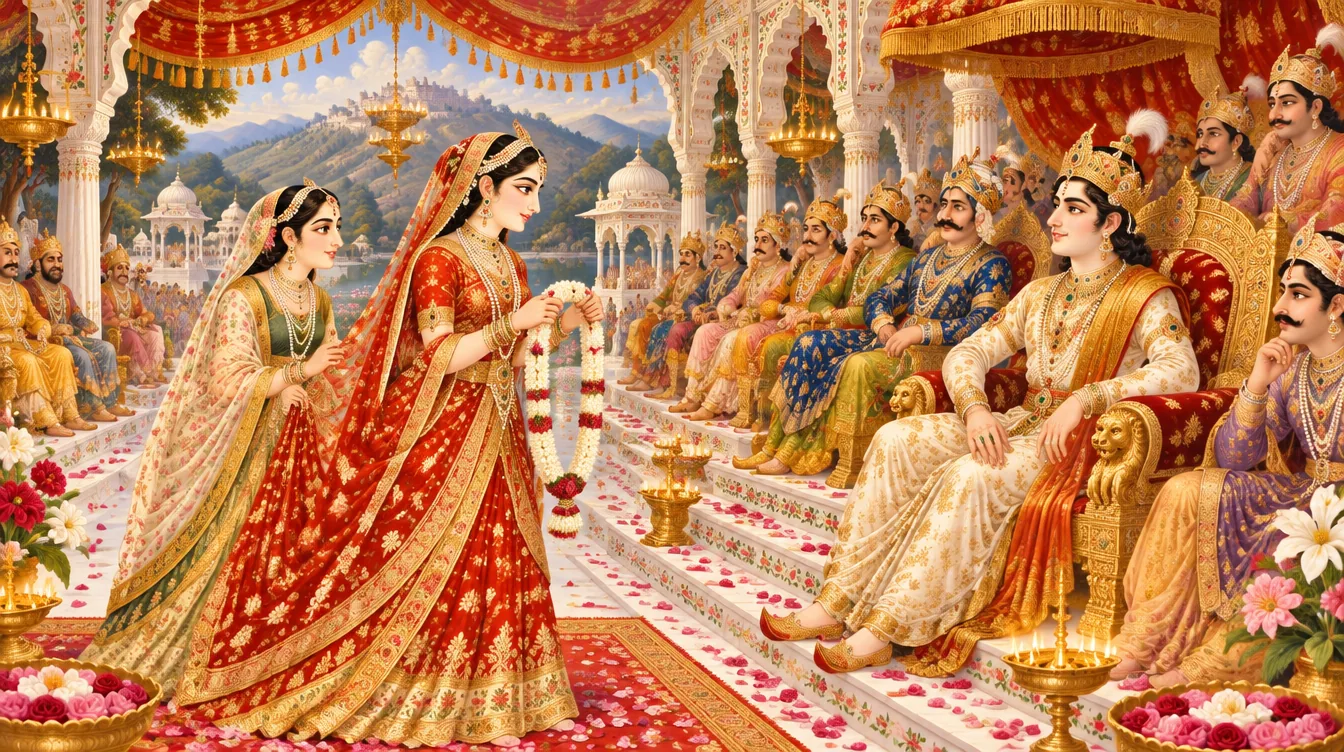
In the hall of Vidarbha the suitor kings sit on raised thrones. Indumati enters in a palanquin, and her companion Sunanda leads her from king to king, describing each: the lord of Magadha, the king of Anga, the rulers of Avanti and Anupa, of the Shurasenas, of Kalinga, of the Pandyas.
Kalidasa's most famous image belongs here. As she moves on, each king she passes grows dark, like a mansion on a royal road when the lamp carried at night has gone by.
She stops before Aja and does not move on. Sunanda reads her face, speaks his lineage, and places the garland on his neck.
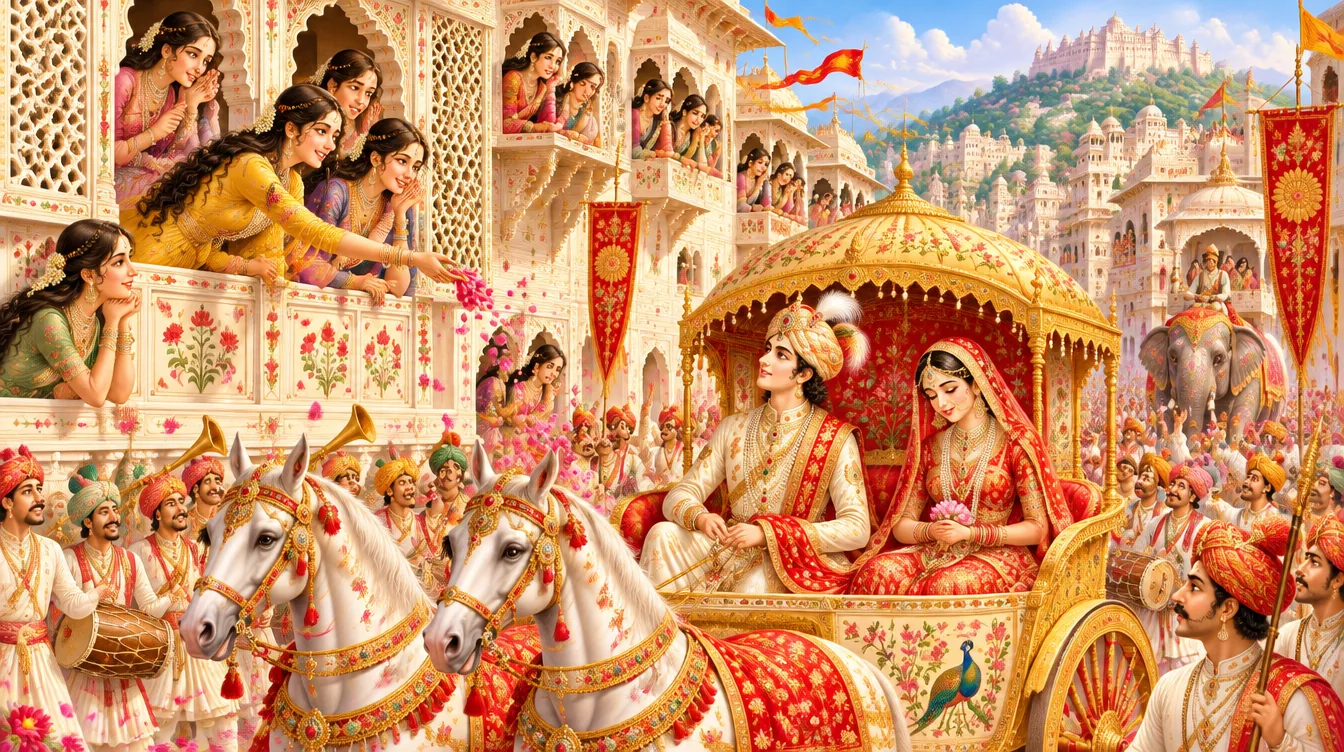
The women of the city crowd the windows to see the bridegroom, abandoning half-finished braids and half-tied girdles. The marriage is performed with the sacred fire.
On the road home the rejected kings ambush the wedding party. Aja fights them, then uses the Sammohana and the whole army falls asleep. With an arrow he writes on their banners that Raghu's son has taken their glory but, out of mercy, not their lives.
At Ayodhya Raghu sees that his son is ready. He hands over the kingdom and gives himself to the life of contemplation.
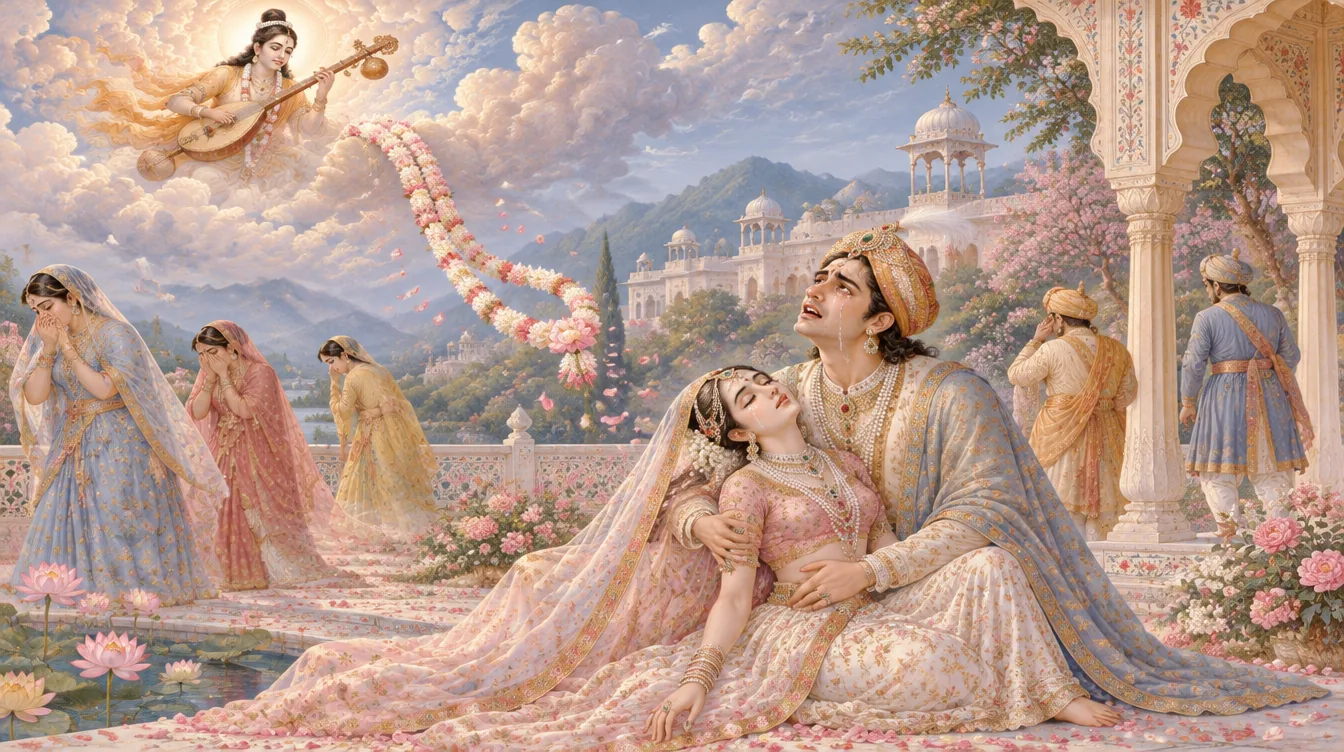
Raghu reaches the end of his long discipline and leaves the world. Aja rules well and Indumati bears a son, Dasharatha.
One day in the palace garden the sage Narada passes overhead. The wind lifts a celestial garland from the tip of his veena and it falls on Indumati's breast. She dies at once.
Aja's lament is one of the great elegies of Sanskrit. If a flower can kill, he asks, what can death not use as a weapon? Vasishtha sends word: Indumati was the apsara Harini, cursed by the sage Trinabindu to be born as a woman until she saw a flower of heaven. The curse has ended. Grief is useless.
Aja lives on for the sake of his young son. When Dasharatha is old enough to rule, Aja fasts until death where the Sarayu meets the Ganga, and is reunited with his wife in the gardens of heaven.
Kalidasa retells the Ramayana in seven cantos, briskly, as one chapter of a longer family history.
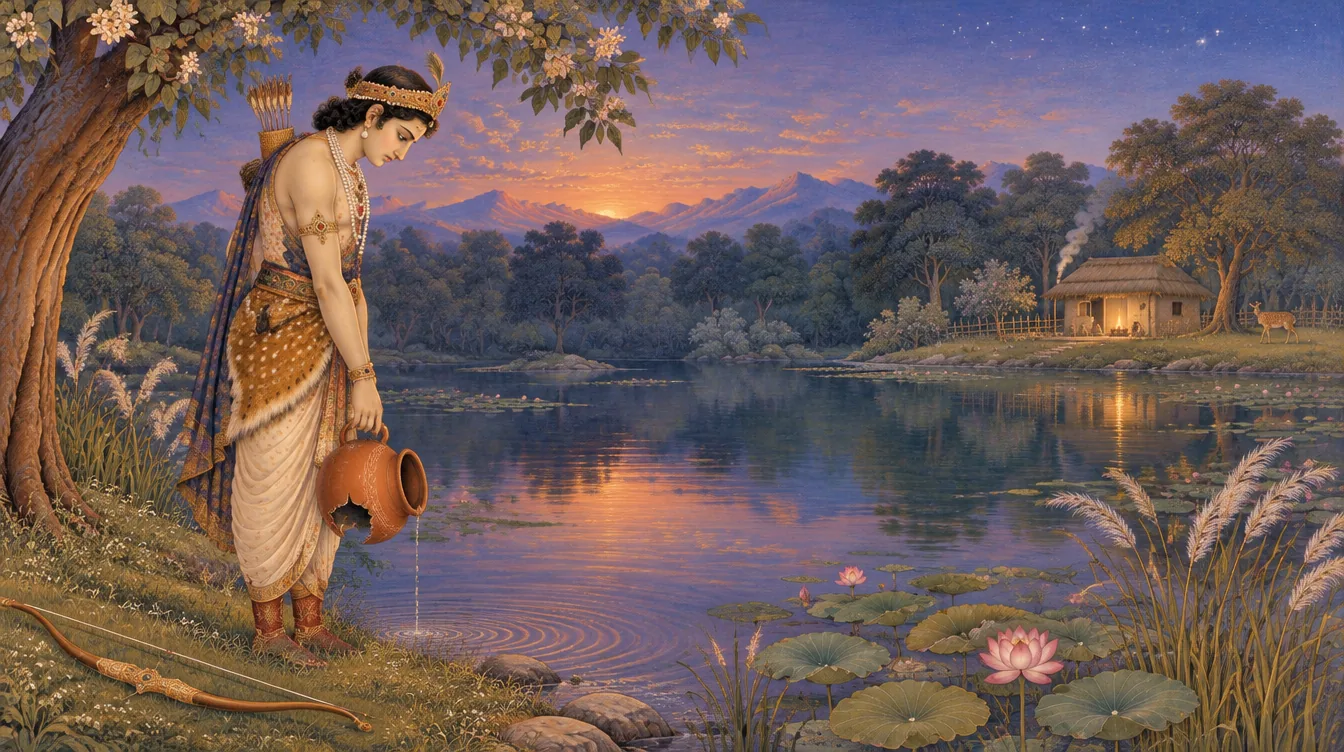
Dasharatha is a powerful king who marries three queens: Kausalya, Kaikeyi and Sumitra. Spring arrives in a long, lush description, and the king goes hunting.
At dusk by a lake he hears a gurgling sound and shoots at it, thinking it an elephant drinking. It is a young hermit filling a water pot. Dasharatha carries the dying youth to his blind parents. The father curses him: he too will die grieving for a son.
Dasharatha, still without children, hears the curse almost as a promise.
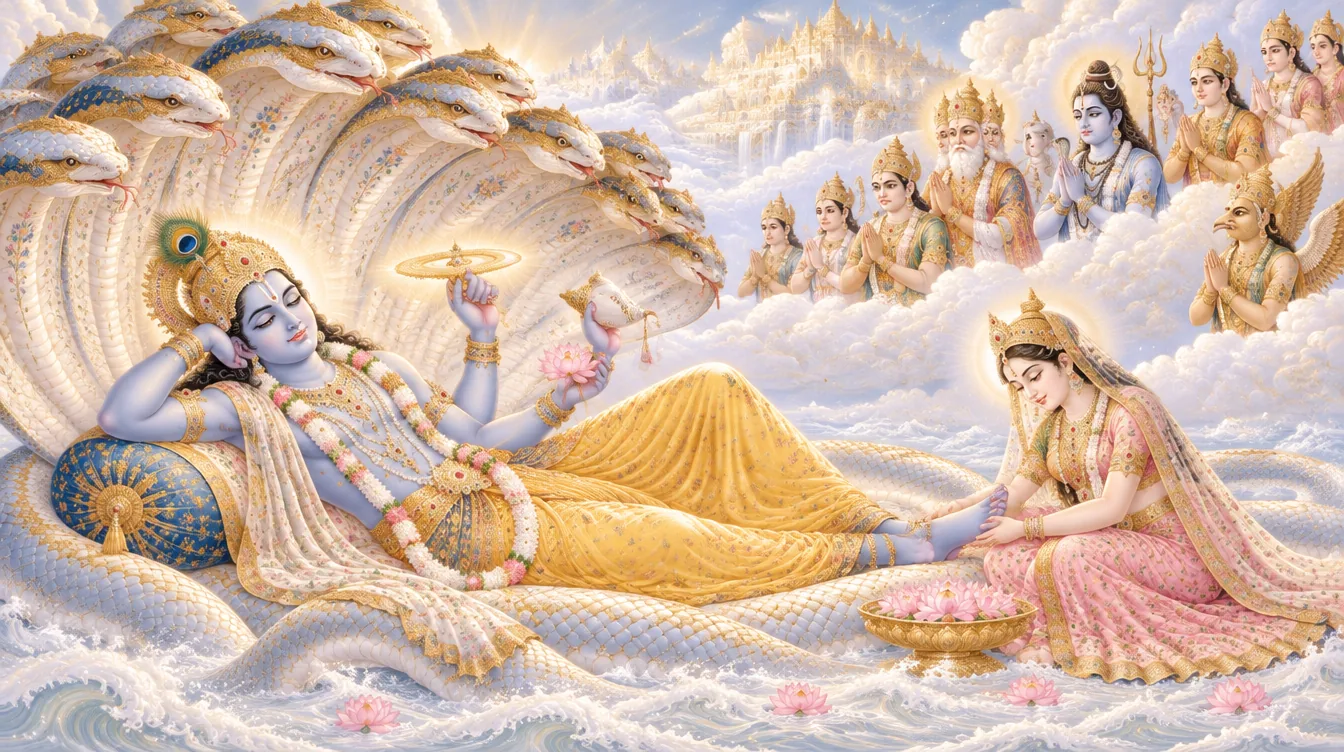
The gods, oppressed by Ravana, go to Vishnu as he rests on the cosmic serpent and praise him. He agrees to be born as Dasharatha's son.
The sage Rishyashringa performs the sacrifice for sons, and a divine figure rises from the fire with a bowl of sweet offering. The queens share it. Kausalya bears Rama, Kaikeyi bears Bharata, and Sumitra bears the twins Lakshmana and Shatrughna.
The sage Vishvamitra asks for the boys to protect his sacrifice. Rama kills the demoness Tataka and drives off Maricha and Subahu, and Vishvamitra teaches him divine weapons.
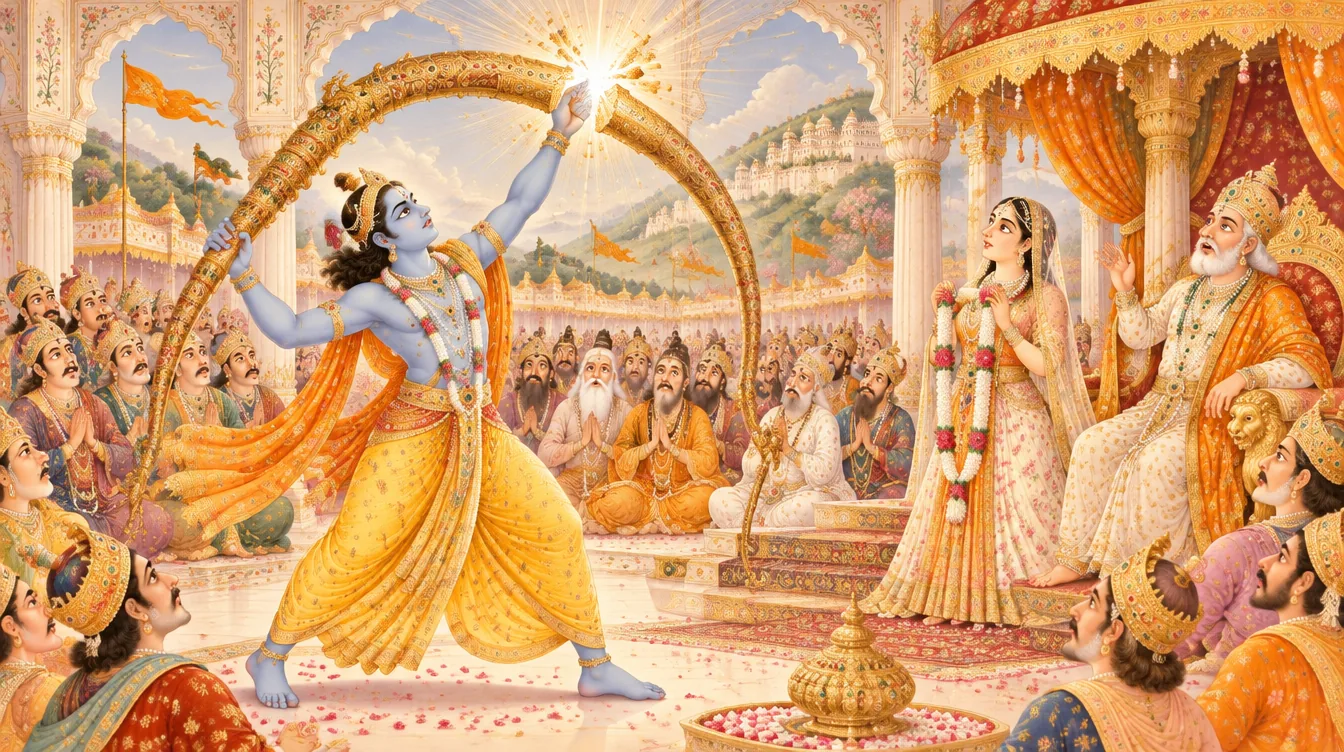
On the way to Mithila, the touch of Rama's foot frees Ahalya from her curse. In King Janaka's court Rama lifts and breaks the great bow of Shiva and wins Sita. All four brothers marry.
Returning home they meet Parashurama, the warrior sage, enraged at the broken bow. Rama strings Parashurama's own bow, and the older avatar gives way to the younger.
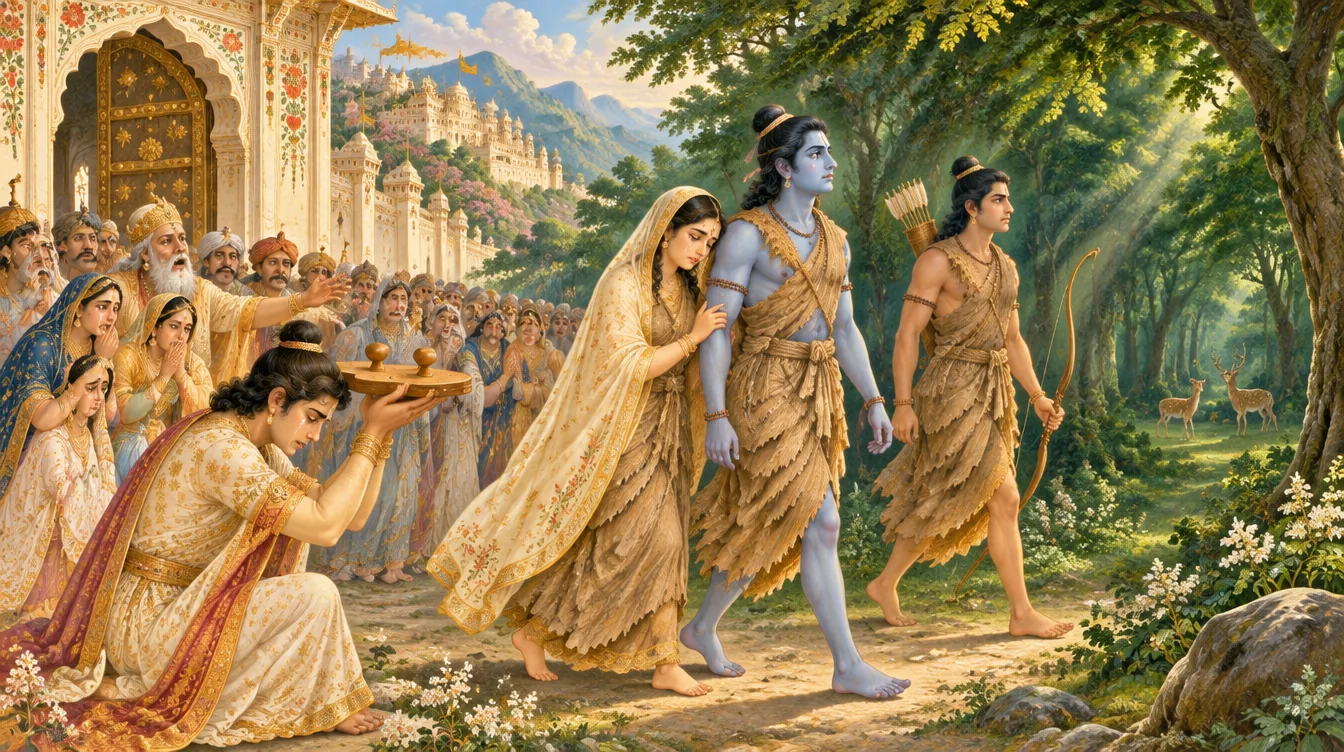
Kaikeyi claims two old boons: Rama's exile and Bharata's crowning. Rama goes to the forest with Sita and Lakshmana, and Dasharatha dies of grief, fulfilling the hermit's curse. Bharata refuses the throne and rules only as Rama's regent, keeping his sandals on the seat.
In the forest the demoness Shurpanakha is rebuffed and mutilated, her brothers are destroyed, and Ravana sends Maricha disguised as a golden deer. Ravana carries Sita off to Lanka, wounding the vulture Jatayu.
Rama allies with Sugriva and the monkey host, Hanuman finds Sita, a bridge crosses the sea, and in the great battle Rama, riding Indra's chariot, kills Ravana.
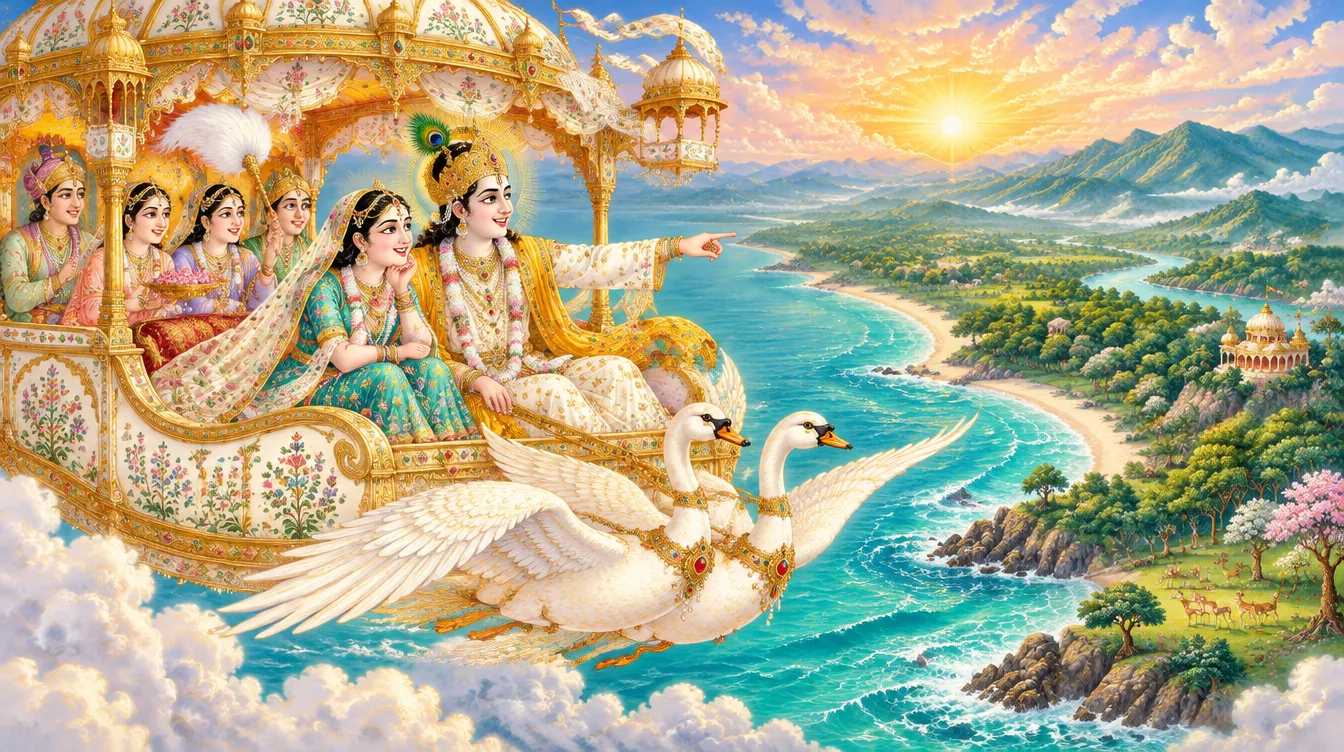
Rama, Sita and their allies fly home in the aerial chariot Pushpaka. As they cross the ocean and the forests, Rama points out the places of their story to Sita: where the bridge stood, where he searched for her, the lakes and hermitages that held his grief.
It is a travelogue of memory, one of the loveliest cantos in the poem. Bharata comes out to meet them carrying the sandals he has guarded for fourteen years.
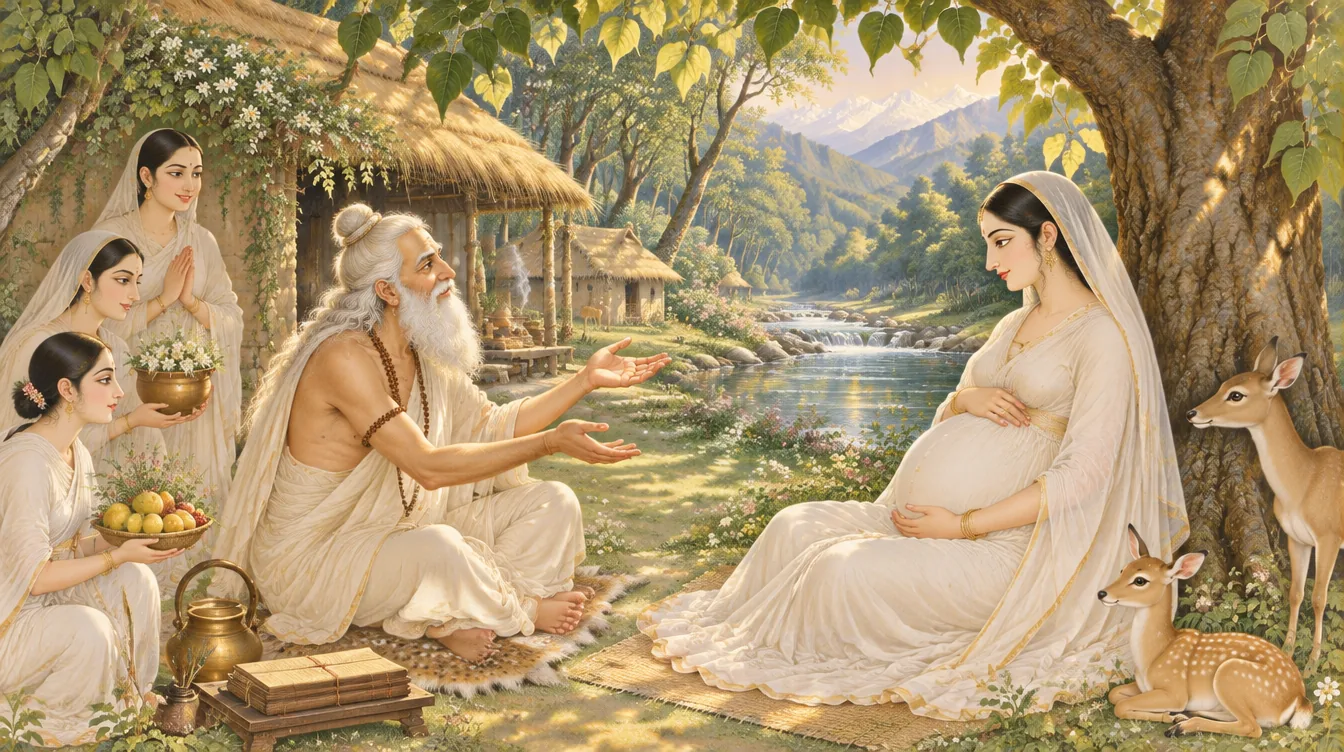
Rama is crowned, and for a time all is well. Sita is pregnant. Then Rama learns that his subjects are whispering about a queen who lived in another man's house.
Putting the throne above himself, he has Lakshmana leave Sita in the forest near the hermitage of Valmiki. Sita's message back to Rama is dignified rather than bitter: she asks to be remembered as a subject entitled to his protection, and resolves to live for the child she carries.
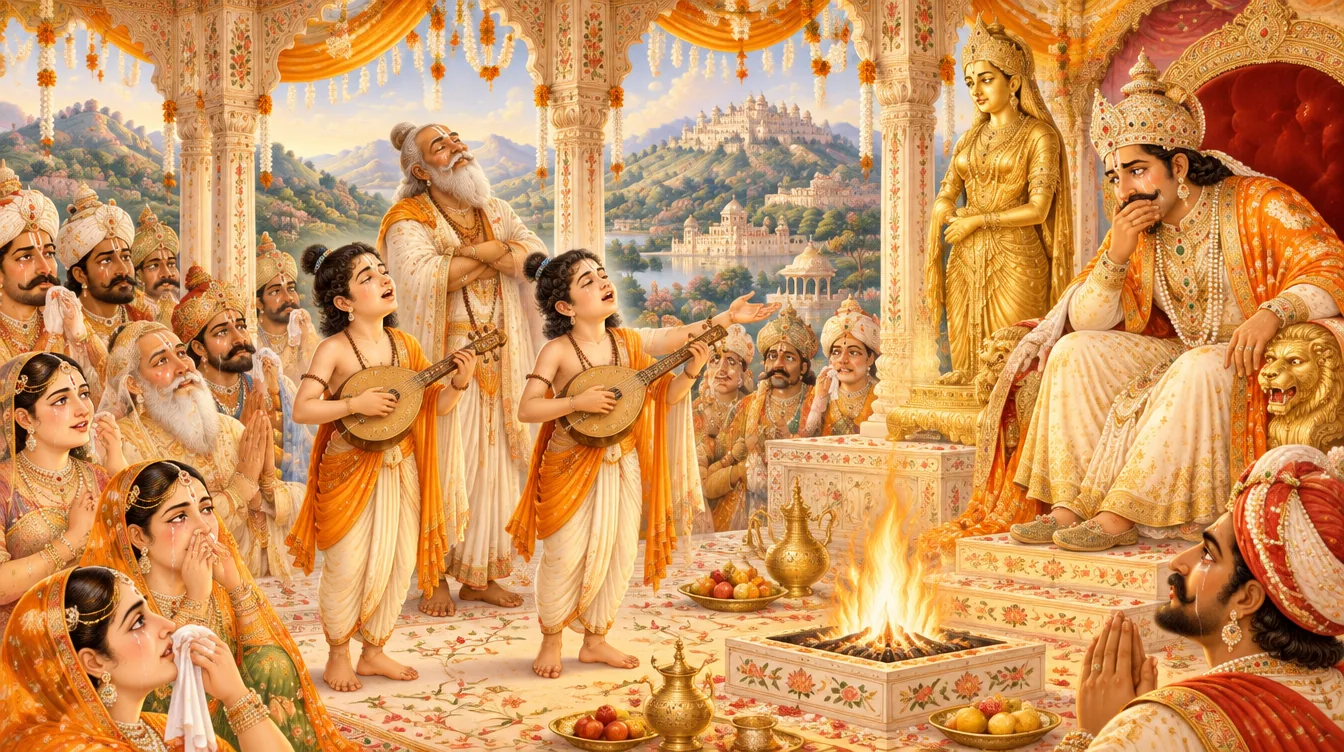
Sita bears twins, Lava and Kusha, who are raised by Valmiki and learn his Ramayana. Shatrughna defeats the demon Lavana. Rama performs a horse sacrifice with a golden image of Sita beside him.
The twins sing the Ramayana at the sacrifice and are recognised as Rama's sons. Sita, called to prove her purity once more, asks the Earth her mother to take her, and the ground opens.
Rama divides the kingdom among the sons of the four brothers. Kusha receives Kushavati and Lava receives Shravasti. Then Rama leaves the world, and the people of Ayodhya follow him.
After the avatar, the dynasty continues as ordinary history: restoration, a model king, a list of names, and a fall.
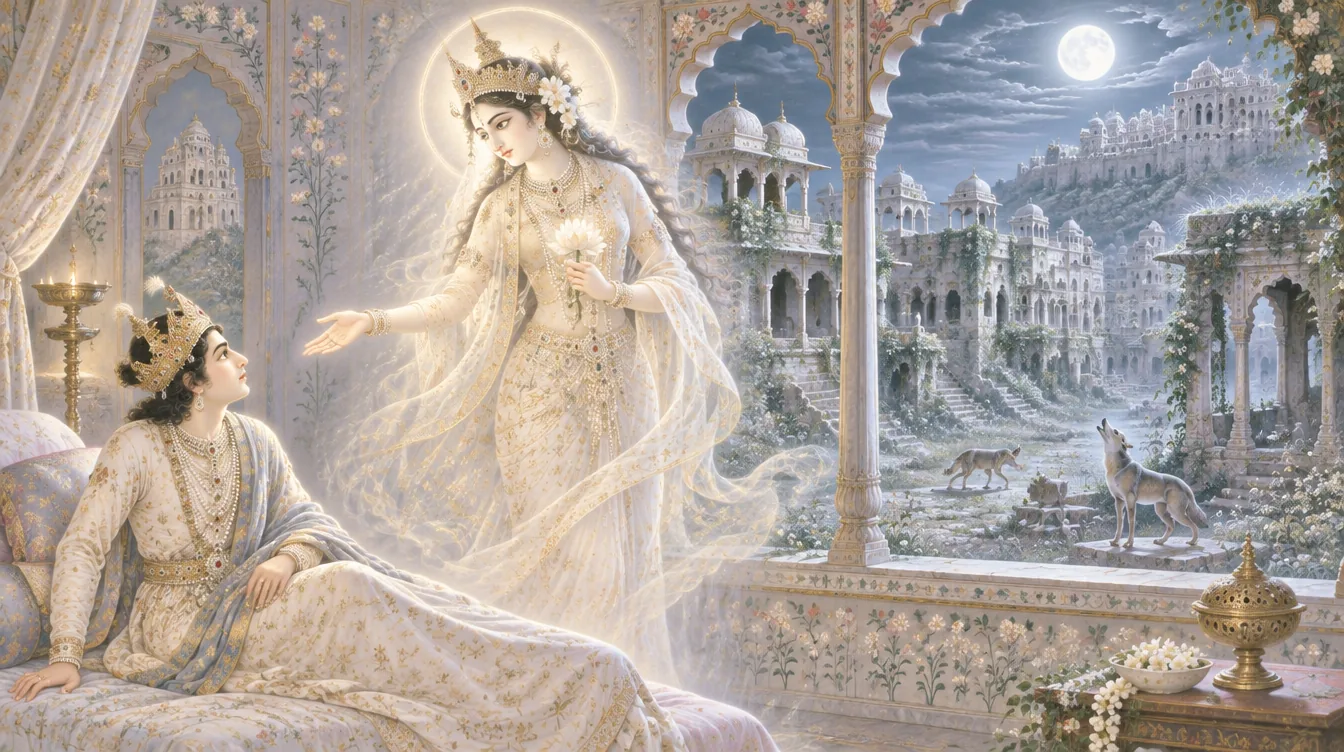
One night in Kushavati a woman appears in Kusha's locked chamber. She is the presiding goddess of Ayodhya. Since Rama left, she says, the city lies empty: jackals howl where women once sang, peacocks no longer dance, the river steps are broken and wild elephants tear at the lotus pools.
Kusha leads his army and court back to Ayodhya and rebuilds it. Markets reopen, temples are restored, the city lives again.
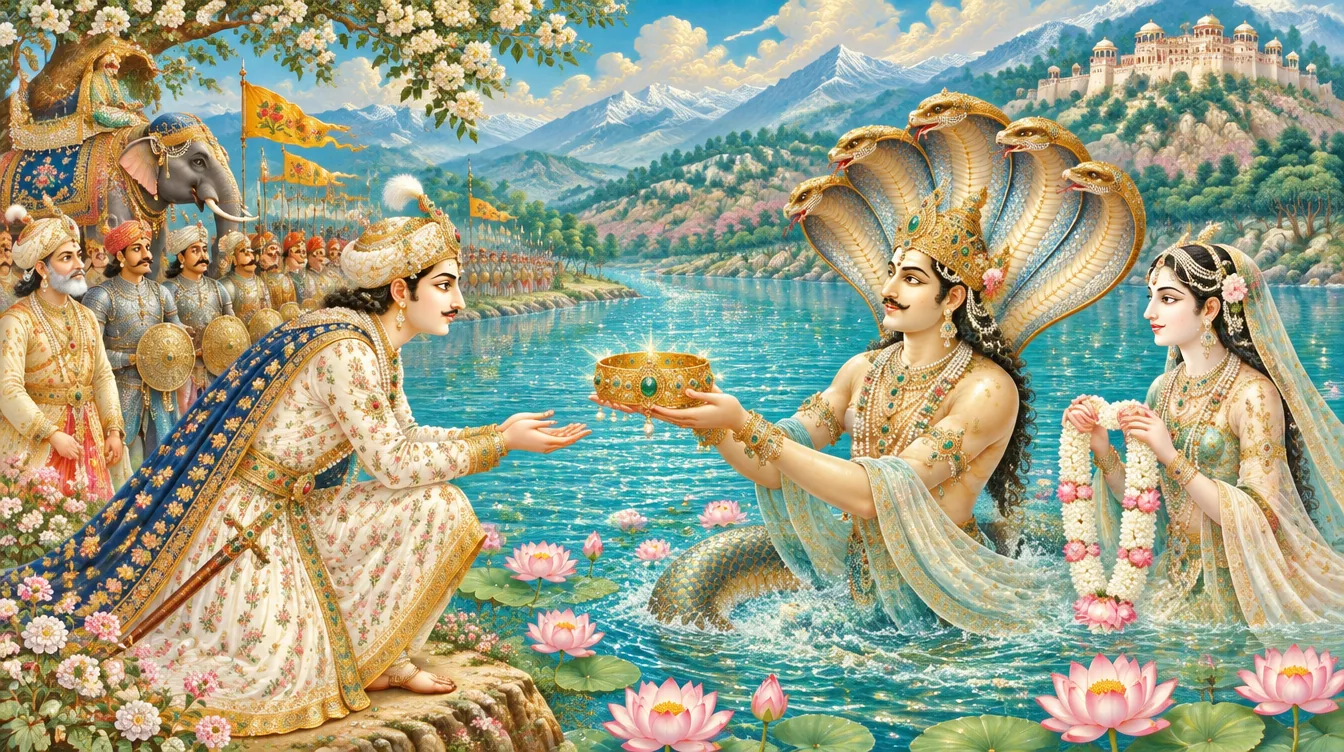
In summer, bathing in the Sarayu, Kusha loses a victory armlet that had come down from Rama. Divers find nothing. Kusha aims a weapon at the river, and Kumuda, king of the Nagas, rises from the water to return it, bringing his sister Kumudvati as Kusha's bride.
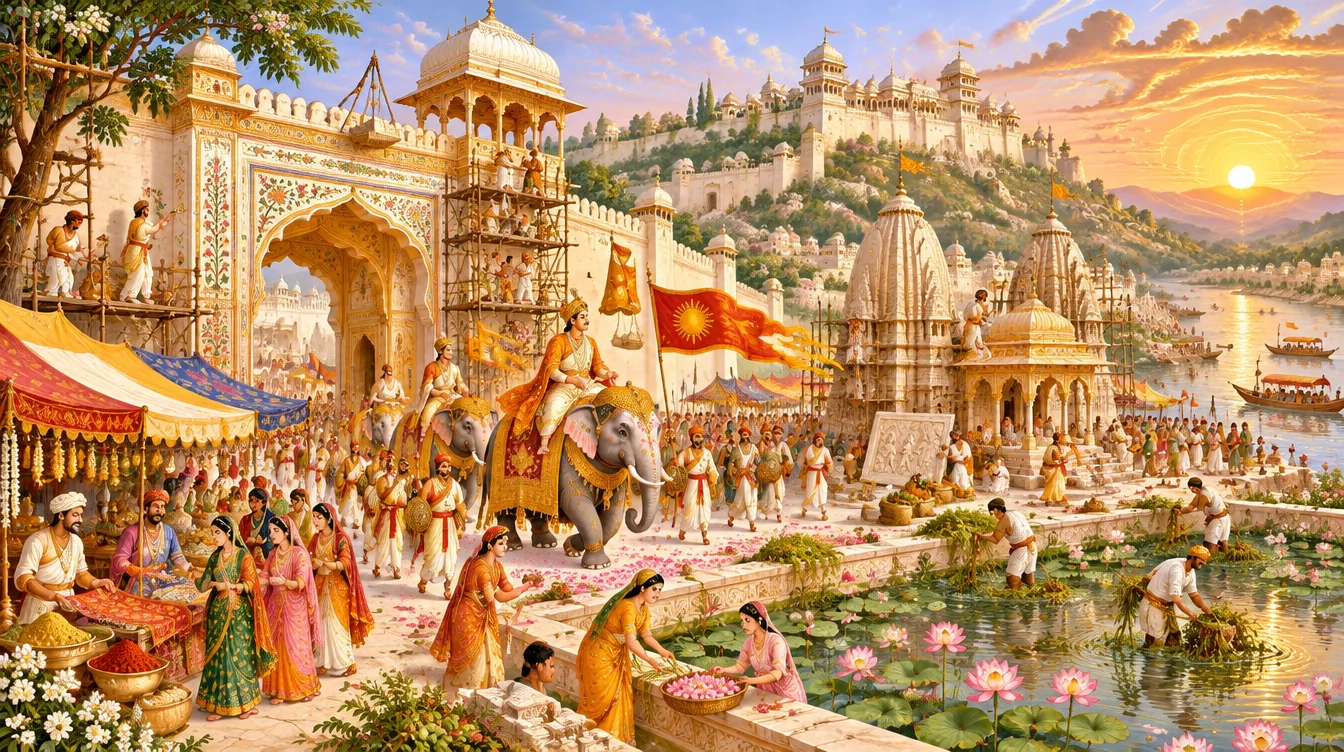
Kusha and Kumudvati have a son, Atithi. Kusha dies fighting beside Indra against the demon Durjaya, and Atithi is crowned.
This canto is Kalidasa's portrait of good kingship. Atithi is accessible to his subjects, quick to decide, steady in counsel, a king whose strength is in being trusted rather than feared.
The narrative quickens into a royal list: Nishadha, Nala, Nabhas, Pundarika, Kshemadhanvan, Devanika, Ahinagu, Pariyatra, Shila, Unnabha, Vajranabha, Shankhana, Vyushitashva, Vishvasaha, Hiranyanabha, Kaushalya, Brahmishtha, Putra, Pushya, Dhruvasandhi and Sudarshana. Each gets a verse or two, often a pun on his name.
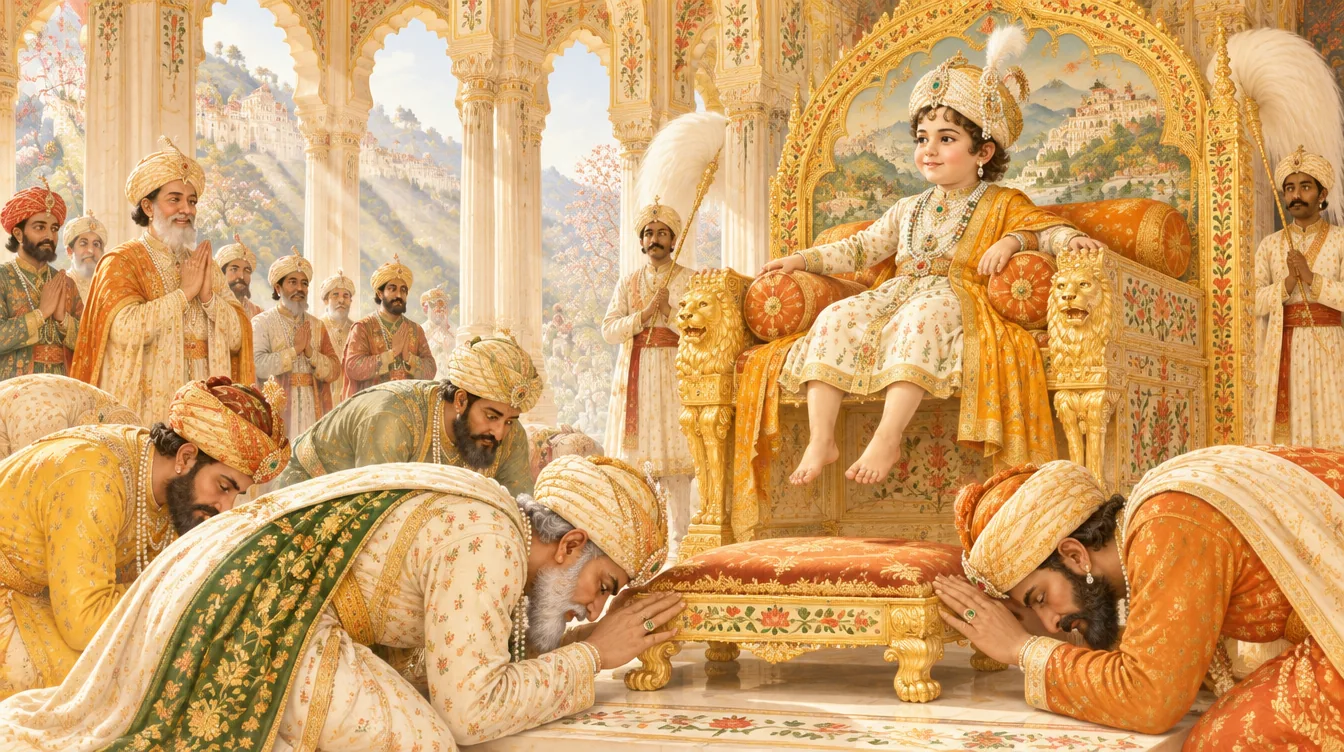
Dhruvasandhi dies hunting, killed by a lion. His son Sudarshana is only six. The ministers crown him anyway, and the old courtiers bow to the feet of a boy that dangle above the floor of the throne.
Sudarshana's son Agnivarna inherits a kingdom made safe by his ancestors and leaves it to his ministers. He lives in the inner palace among music, wine and lovers. When his subjects ask to see their king, he lets them glimpse only a foot hanging from a window.
The wasting illness comes. He ignores his physicians. His ministers hide his decline, and when he dies they cremate him quietly in the palace garden.
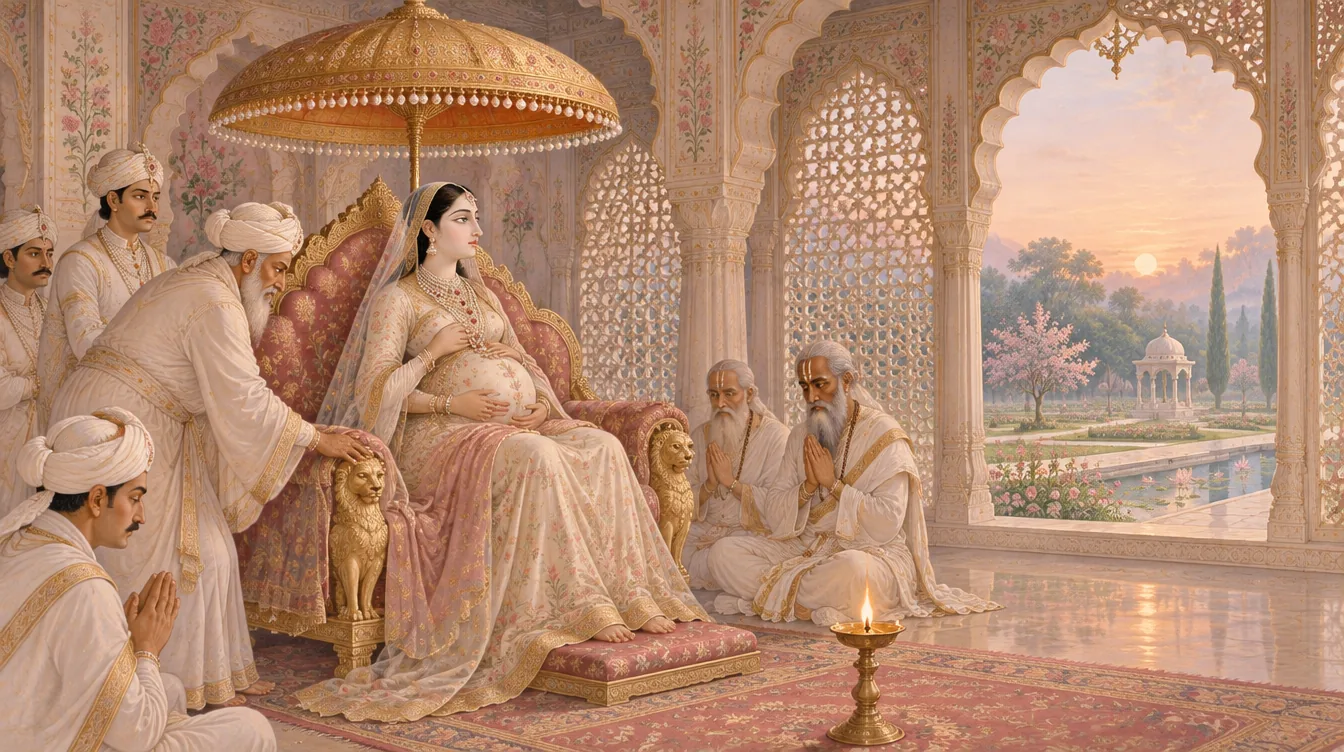
There is no son, but the chief queen is pregnant. The ministers place her on the throne, and the people wait on the child in her womb. That is where Kalidasa stops.
Search by name or role. Choose “Find in the story” to jump to the first canto where they appear.
A model king who must learn humility by herding a cow.
A princess of Magadha who shares every hardship of the vow.
The sage who diagnoses the curse and later consoles Aja.
Mother of all cattle in tradition; her slighted honour starts the story.
Tests Dilip with an illusory lion and grants him a son.
The lion guarding Parvati's deodar tree.
The one who surpasses; conqueror and giver.
Takes the sacrificial horse and yields to Raghu's courage.
Asks fourteen crore for his teacher and accepts no more.
Rains gold into Raghu's treasury before he can be attacked.
Bridegroom, merciful victor and grieving husband.
Freed from an elephant's shape, he gives Aja the Sammohana weapon.
An apsara under a curse, chooses Aja at her swayamvara.
Introduces the suitor kings with wit and tact.
His veena drops the garland that ends Indumati's curse.
Father of Rama, cursed to die grieving for a son.
Vishnu born in the dynasty; king who puts duty above self.
Queen, exile and mother of Lava and Kusha.
Companion in exile.
Refuses the throne and rules as regent.
Shelters Sita and teaches the twins his Ramayana.
Brings Ayodhya back to life.
Wife of Kusha, mother of Atithi.
Kalidasa's portrait of the ideal ruler.
Crowned at six after his father's death.
Neglects his kingdom for pleasure.
What the story keeps returning to, across thirty generations.
Dilip regains his future by becoming a servant. Power in this poem is earned by humility first.
Raghu's conquest matters because it ends in the Vishvajit. The hero of Canto 5 is the man with a clay bowl.
Aja's story asks what a king owes his people when private grief would rather die.
Rama gives up Sita to keep faith with his subjects. Kalidasa tells it plainly and lets readers feel the cost.
The poem is a mirror for princes: virtues build a dynasty over generations and indulgence can empty it in one.
Himalayan meadows, the Narmada, the ocean seen from Pushpaka, a deserted Ayodhya: landscape carries the feeling.
The work behind this retelling, and where to read it for yourself.
Kalidasa is the most celebrated poet of classical Sanskrit. He is generally placed around the fourth to fifth century CE, though his dates are debated. His other works include the play Abhijnanashakuntalam, the lyric Meghaduta and the epic Kumarasambhava.
Raghuvamsham is a mahakavya, a court epic in nineteen cantos (sargas). Tradition counts it among the five great mahakavyas of Sanskrit literature.
Most readers have met the poem through the Sanjivani commentary of Mallinatha, a medieval scholar whose notes became the standard key to Kalidasa's verse.
The poem stops with Agnivarna's queen on the throne. Whether Kalidasa meant to end there or the later cantos were lost is still discussed. Either way, the open ending is now part of its meaning.
This storyline follows the order of the nineteen cantos and keeps to the events of the poem. Wording is our own. Where versions of an episode differ, we follow the commonly read text with Mallinatha's commentary. Illustrations are artist's impressions in the manner of Pahari miniature painting, not historical records.