A teaching receives authority
A narrative frame introduces a teaching about dharma. It asks the reader to recognize a particular source of order before individual rules are set out.

Read the Manusmriti as a layered Dharmaśāstra work: its teaching voice, social prescriptions, legal topics, interpreters, and contested reception.
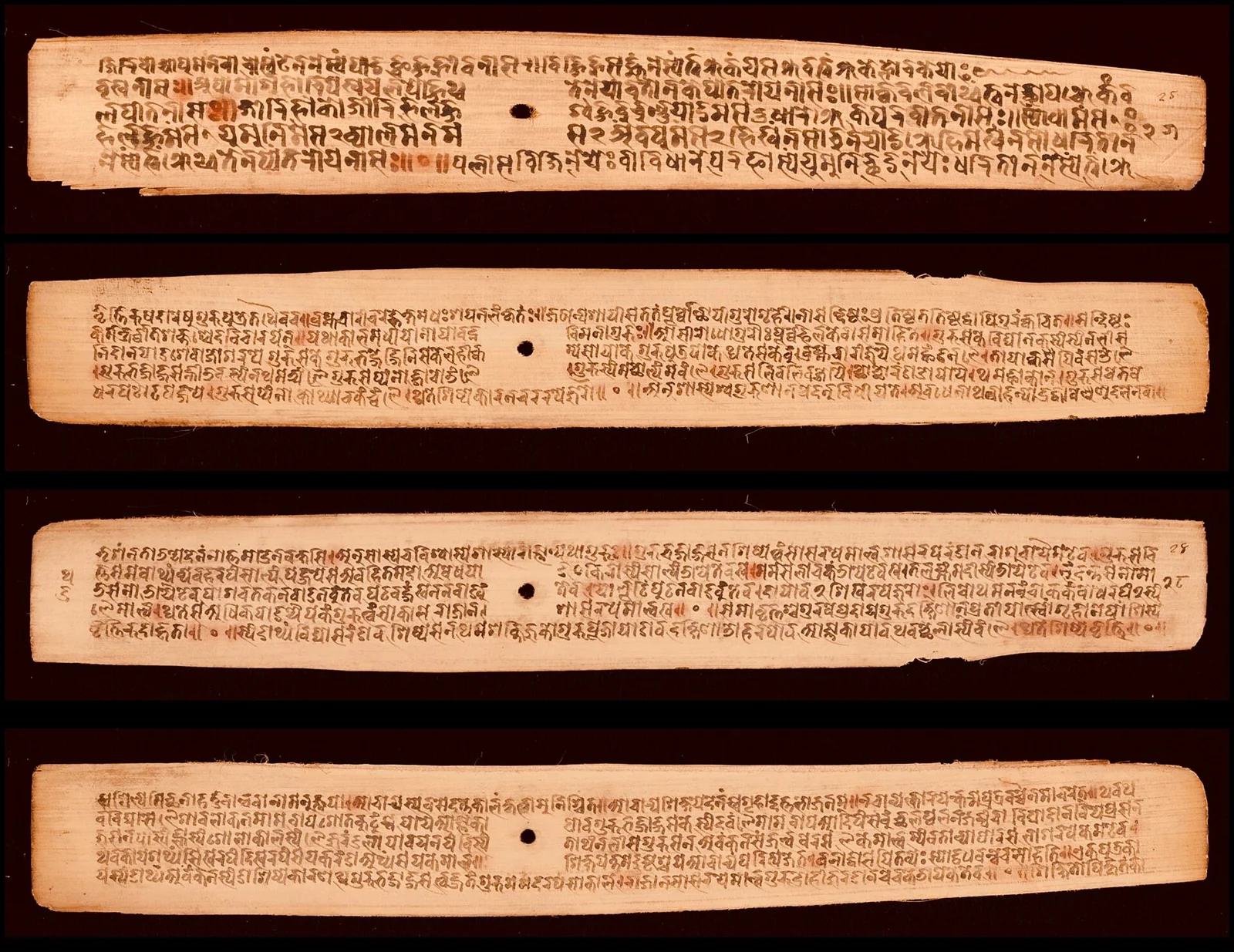
A traditional account of authority, a historical inquiry, and a living interpretation answer different questions. Keep all three visible.
Follow four connected moments. These are interpretive steps through the subject, not a claim that its history occurred in four simple stages.
A narrative frame introduces a teaching about dharma. It asks the reader to recognize a particular source of order before individual rules are set out.
Education, eligibility, household roles, ritual, and disciplined conduct are organized through unequal social classifications. The organization is itself something to study critically.
Kingship, evidence, punishment, property, and family relations expand the text beyond private conduct. Its categories require historical context rather than automatic application today.
Commentaries, colonial legal uses, reform, and anti-caste critique form later reception histories. These must not be silently attributed to the base text itself.
Search the divisions and topics, then choose one to learn its place in the whole. Summaries are guide notes, not translations of every chapter.
A thematic route brings passages into conversation. It does not replace the text’s own arrangement or reduce its diversity to one message.
Choose a lens to uncover a different layer of the same subject.
Read one identified passage with Sanskrit, transliteration, word notes, and translations. The edition and the boundaries of an excerpt remain visible.
Switch between Devanagari and IAST, explore selected terms, and compare an educational rendering in seven modern languages.
English is an original AI-assisted educational rendering, not a quoted published translation. Other languages render that English; none has specialist review.
Read and explore the passage ↗The whole Veda is a root of dharma, together with the tradition and conduct of those who know it, the practice of good people, and satisfaction within oneself.
Complete selected verse. The listing of authorities belongs to this work’s interpretive framework; the final phrase does not simply authorize any individual desire.
Continue in order, or follow a connection. The four Vedas, the Gita, and the three Dharmaśāstra works belong to related but different textual worlds.
This initial Smriti selection contains Manu, Yajnavalkya, and Narada. It does not claim to exhaust the broad and varying category of Smriti.