The Upanishads: sitting near
the teacher.
The Upanishads are the philosophical heart of the Vedas: conversations between teachers and students, husbands and wives, kings and sages, about what is ultimately real and who we really are. Here are the eleven principal Upanishads, each with a guide and its complete text.
The end of
the Veda.
Where the Upanishads sit, what their name means, and how old they are.
Sitting near
Upa-ni-shad is usually explained as "sitting down near": a student close to a teacher, receiving a teaching not meant for everyone. Later commentators also read it as knowledge that destroys ignorance.
The end of the Veda
Each Veda has layers: hymns (Samhita), ritual explanations (Brahmana), forest texts (Aranyaka) and finally the Upanishads. Because they come last and look beyond ritual, they are called Vedanta, "the end of the Veda".
How many?
Over two hundred texts carry the name. A traditional list counts 108. The eleven here are the ones Shankara and later teachers treated as principal; modern scholars often add the Kaushitaki and Maitri to make thirteen.
When
The oldest, the Brihadaranyaka and Chandogya, are generally placed before the Buddha, around the seventh to sixth centuries BCE. Others, such as the Katha and Shvetashvatara, are a few centuries later. All were passed down orally long before they were written.
The principal
Upanishads.
Each has a guide, its most famous verse and the complete text in Sanskrit with an English translation, side by side.
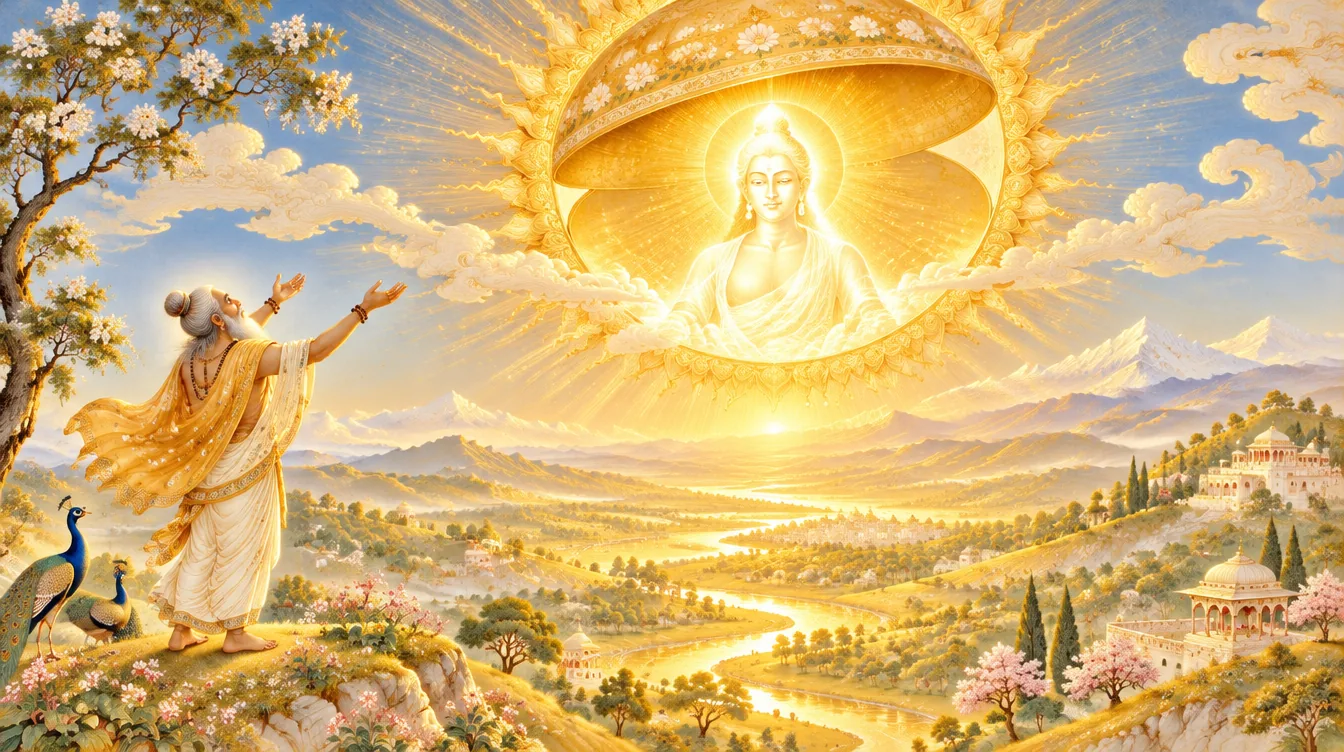
Isha Upanishad
Eighteen verses that hold the whole teaching: the Lord pervades everything, so enjoy the world by renouncing it.
Guide and full text →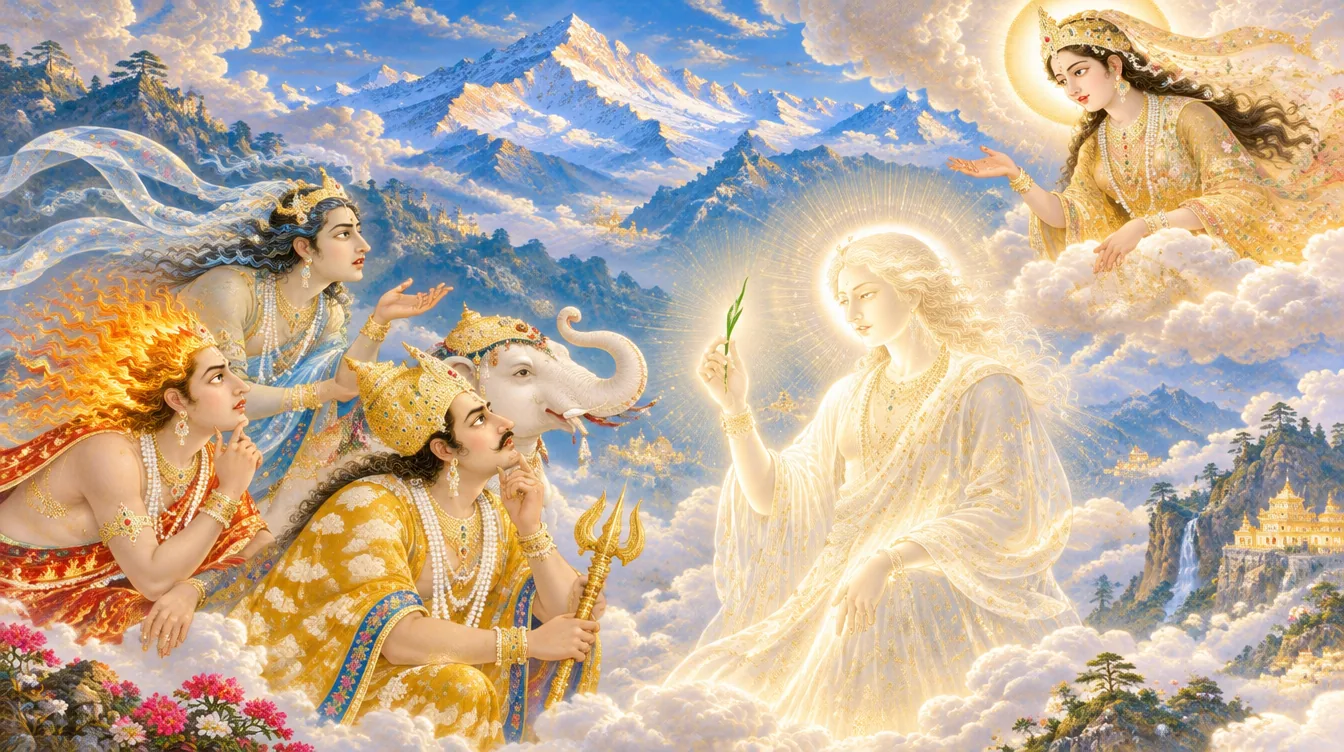
Kena Upanishad
"By whom?" Who makes the mind think and the eye see? And a parable of gods who forgot where their power came from.
Guide and full text →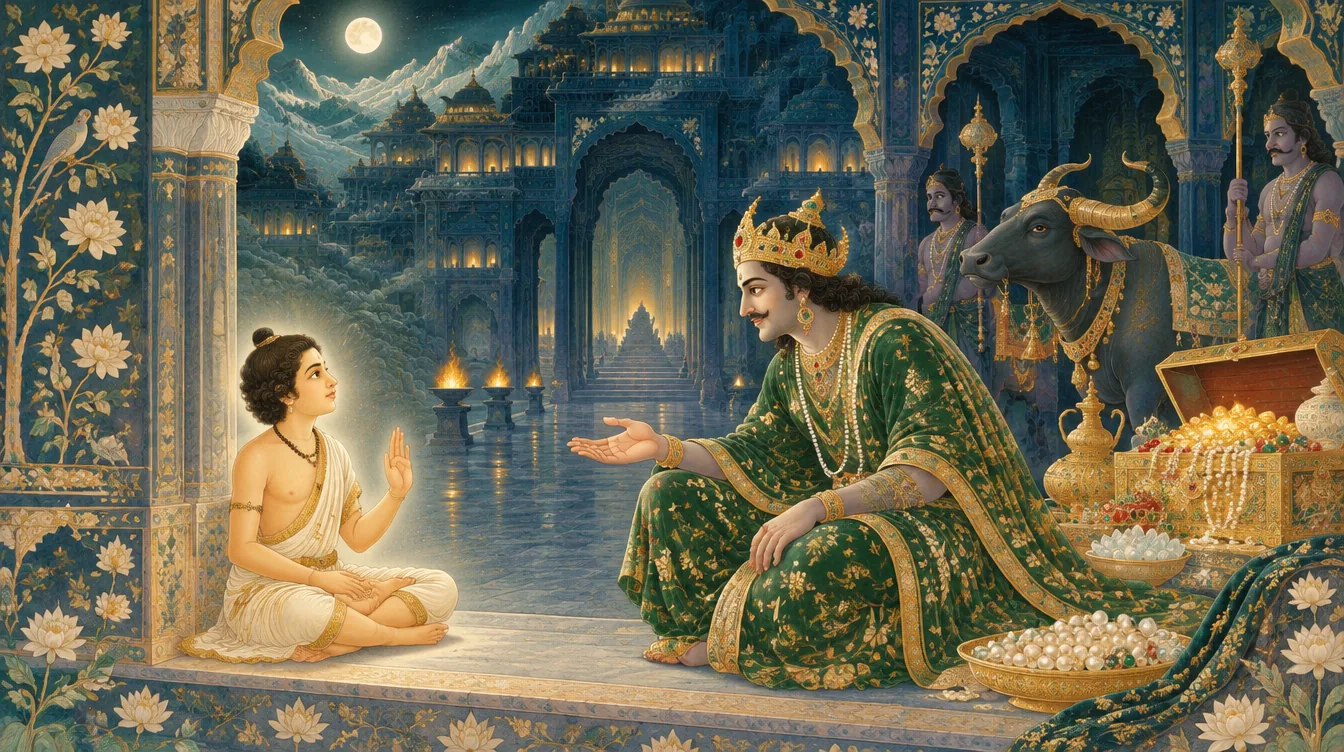
Katha Upanishad
A boy at Death's door asks what happens after we die, and refuses every other gift until he is answered.
Guide and full text →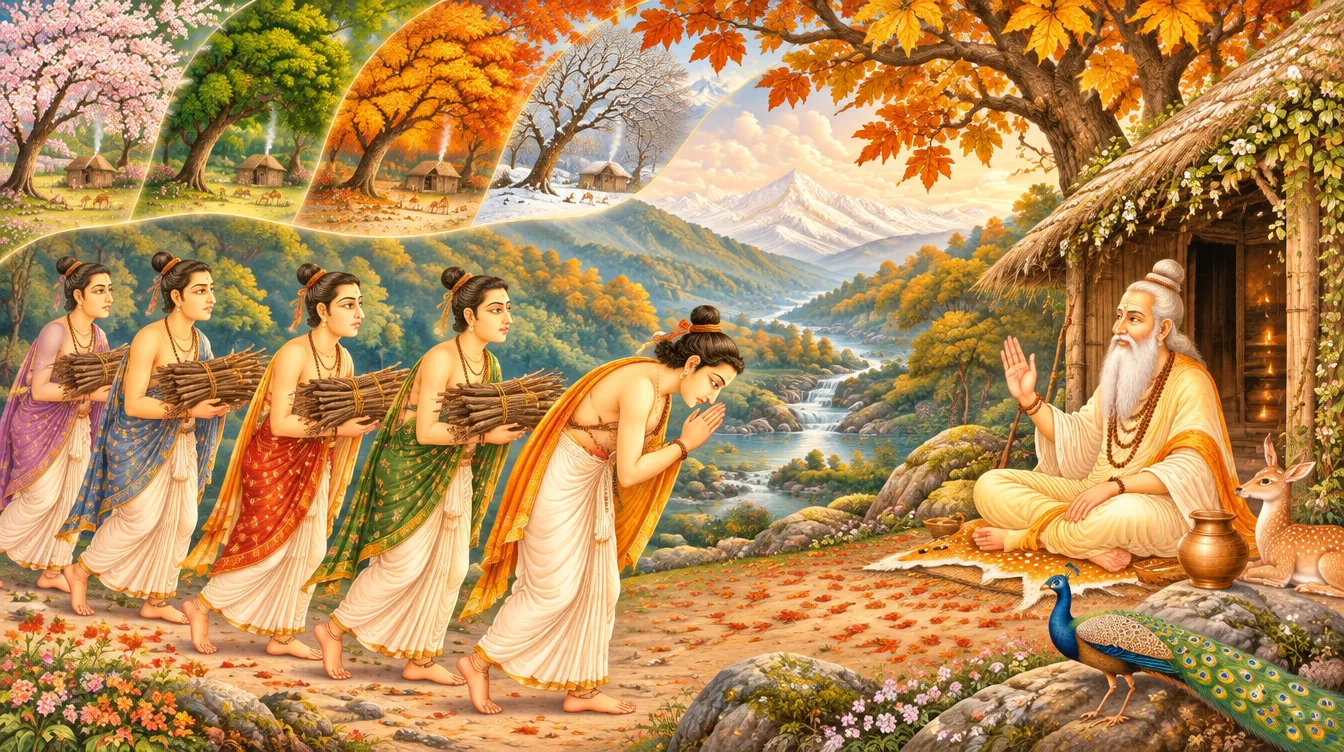
Prashna Upanishad
Six seekers come to a sage with firewood in hand. He makes them wait a year, then answers six questions.
Guide and full text →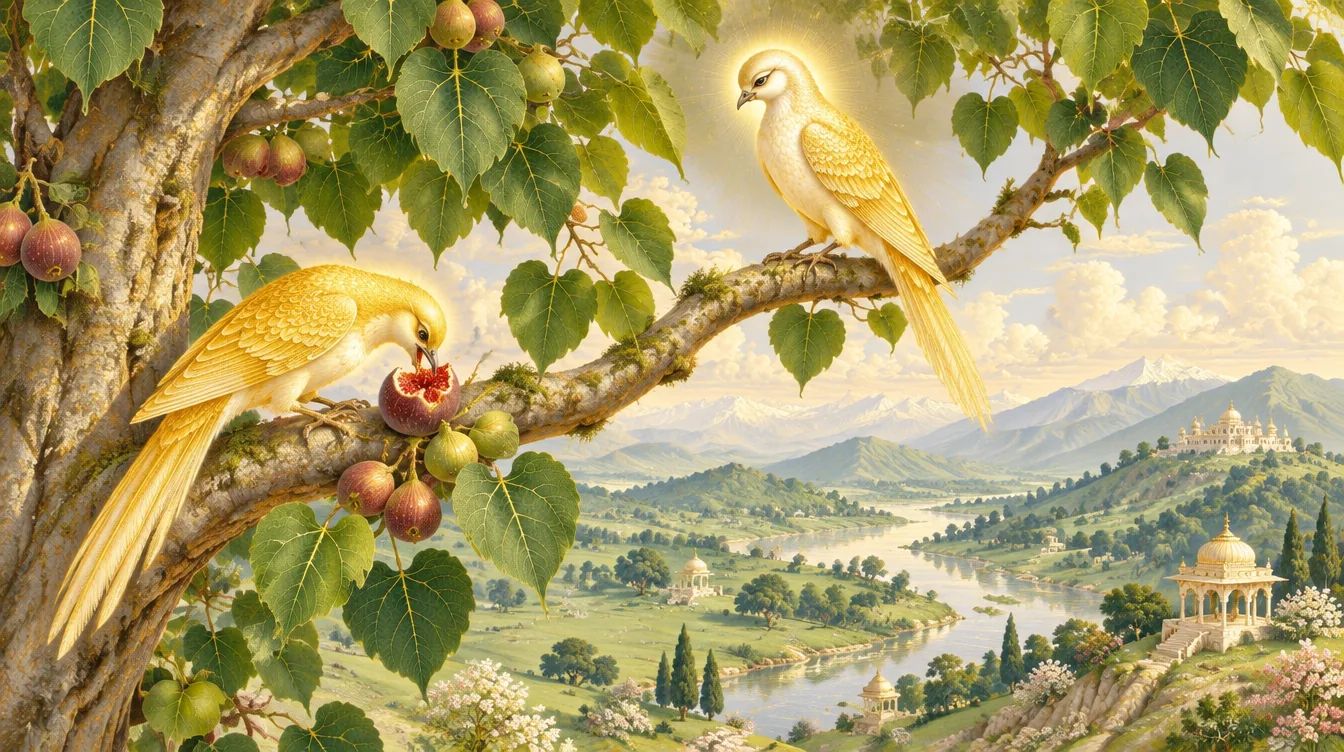
Mundaka Upanishad
Two kinds of knowledge, two birds on one tree, and the line that became India's national motto.
Guide and full text →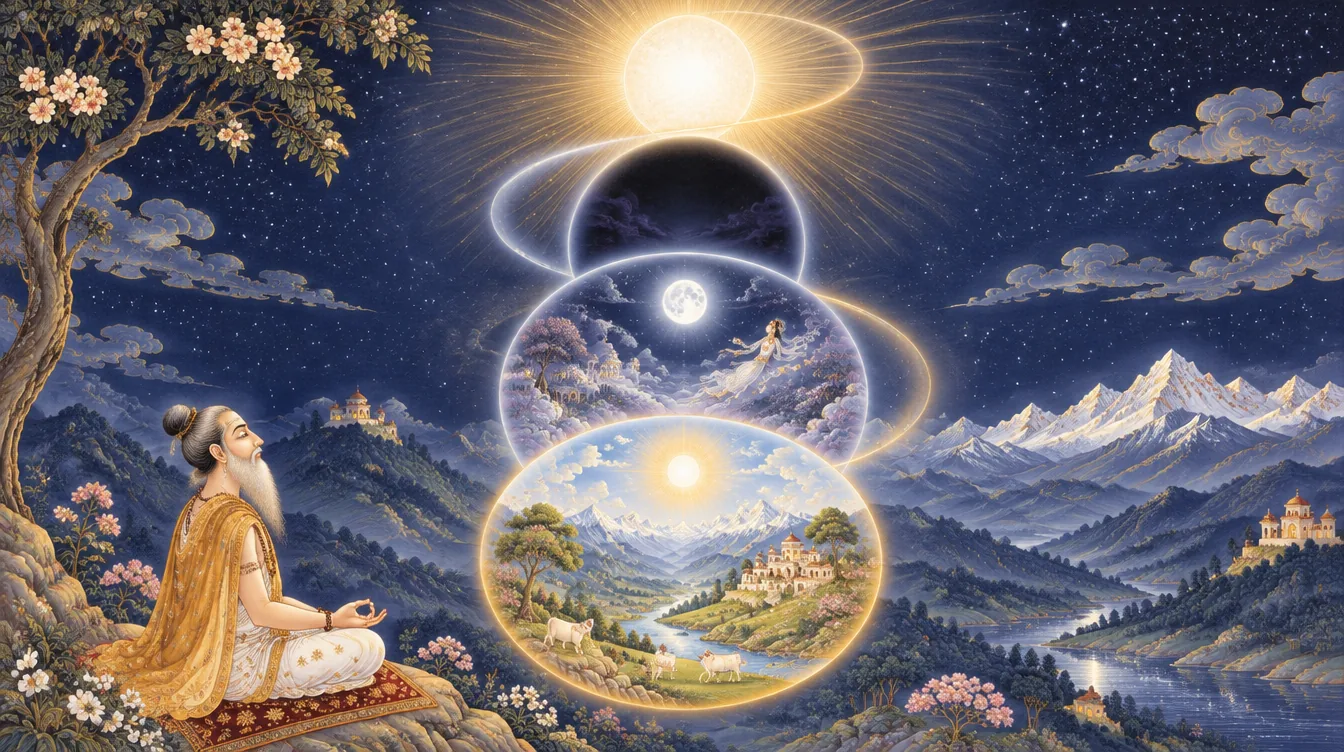
Mandukya Upanishad
Twelve verses on Om and the four states of consciousness. The shortest, and said to be enough on its own.
Guide and full text →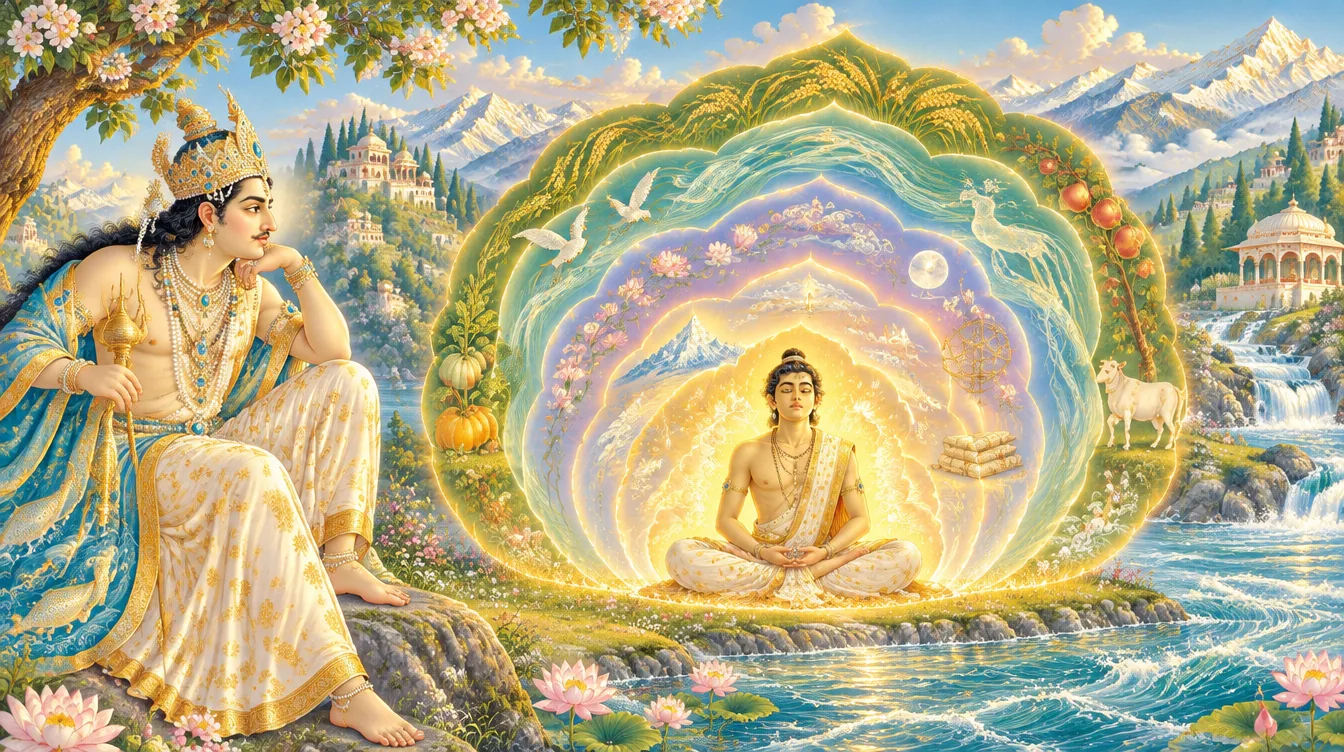
Taittiriya Upanishad
Lessons on pronunciation, a graduation address, and a son who discovers Brahman layer by layer.
Guide and full text →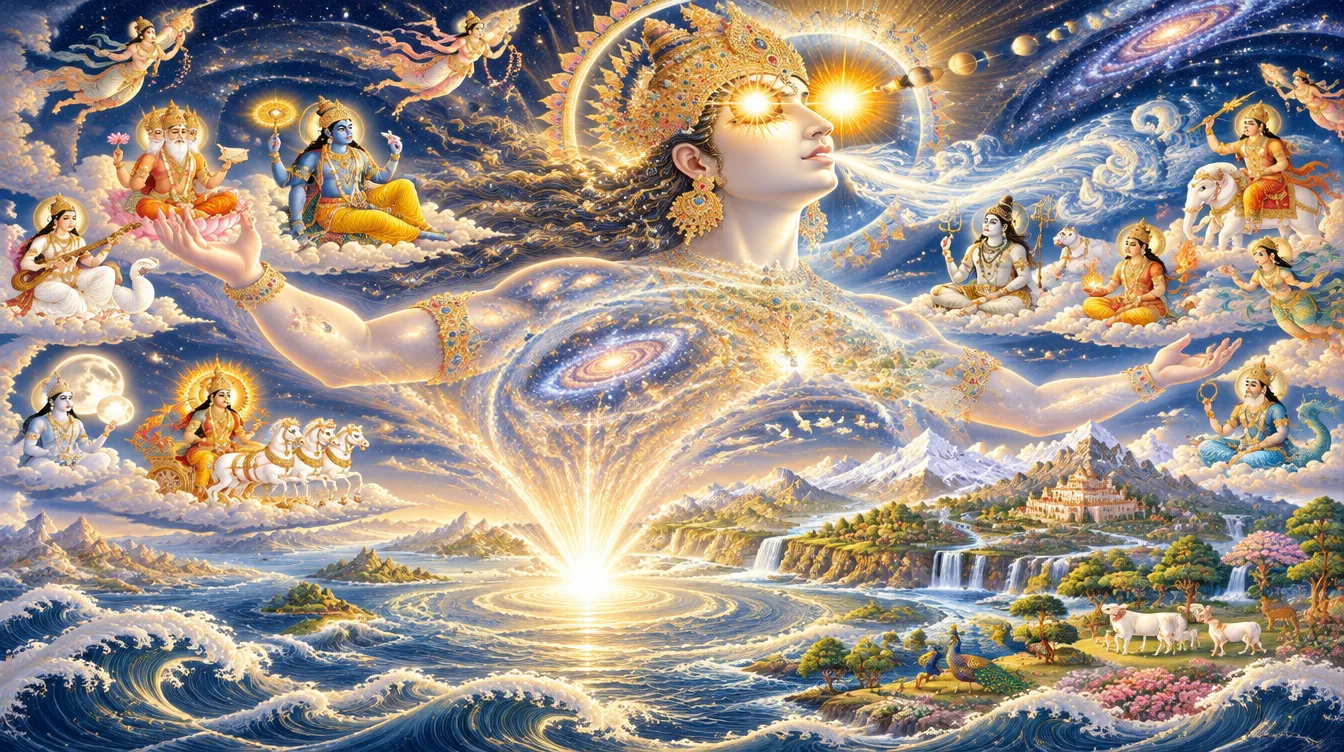
Aitareya Upanishad
A creation story told from the inside: the self makes the worlds, then enters the body through the crown of the head.
Guide and full text →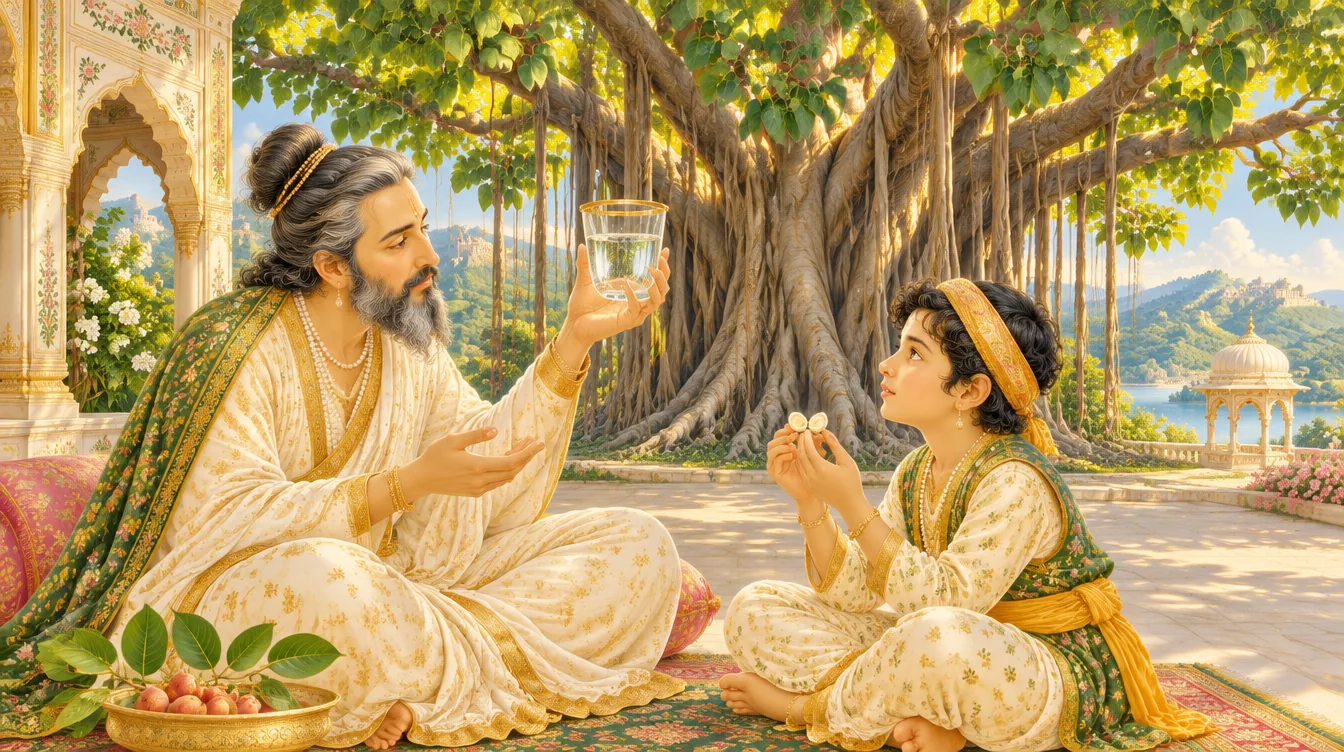
Chandogya Upanishad
One of the two oldest and longest: chants, meditations, and a father who teaches his son "you are that".
Guide and full text →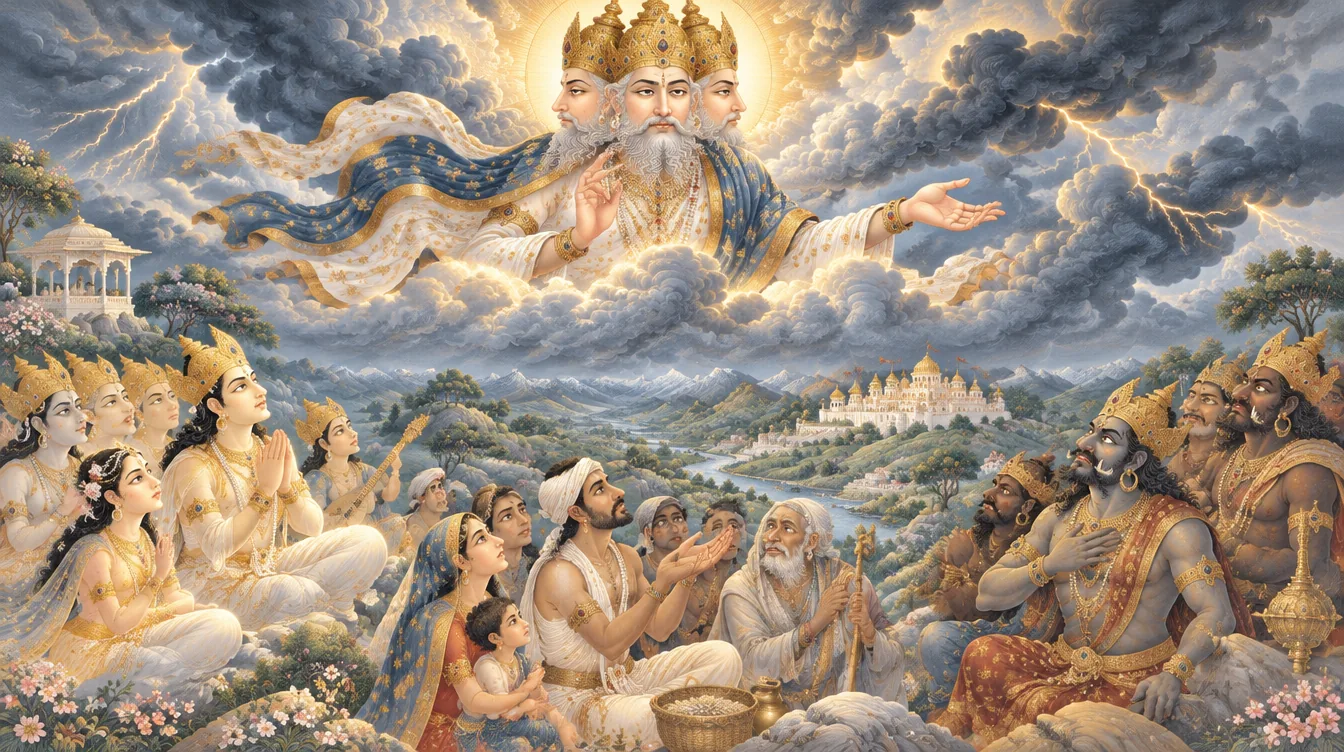
Brihadaranyaka Upanishad
The "great forest text": the debate at Janaka's court, Maitreyi's question, neti neti, and the prayer from darkness to light.
Guide and full text →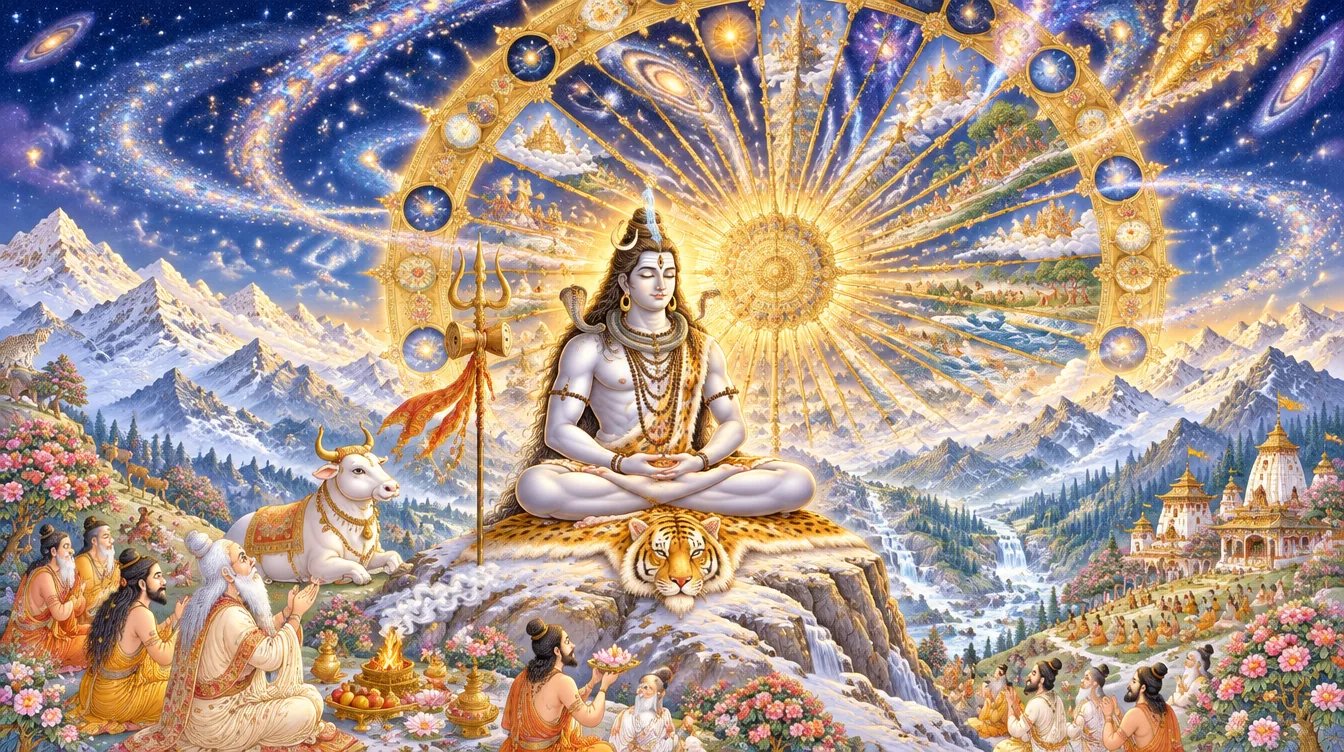
Shvetashvatara Upanishad
Brahman as a personal Lord, Rudra or Shiva, and an early teaching on yoga and devotion.
Guide and full text →Eight words
to start with.
The vocabulary the Upanishads keep returning to, in plain language.
Brahman
The ultimate reality behind everything that exists, described as being, consciousness and boundlessness.
Atman
The true self in each being: not the body, not the mind, but the witness of both.
Atman is Brahman
The boldest teaching: the deepest self in you is the same as the reality of the whole universe.
Karma and rebirth
Actions shape future lives, and the round of rebirth continues until the self is known.
Om
The sacred syllable that stands for Brahman and, in the Mandukya, for every state of consciousness.
Neti neti
"Not this, not this": Brahman cannot be captured by any description, so the Brihadaranyaka teaches by negation.
Five sheaths
The Taittiriya describes the self as wrapped in layers of food, breath, mind, understanding and bliss.
Four states
Waking, dreaming, deep sleep, and a fourth, turiya, the pure awareness underlying all three.
Four great
sayings.
Tradition takes one "great saying" (mahavakya) from an Upanishad of each Veda as a summary of the whole teaching.
Teaching
by story.
The Upanishads teach through conversations and parables. Many of their students and teachers appear in our Gurukul history too.
Nachiketa and Death
A boy refuses every pleasure Death offers until he learns what lies beyond dying.
Katha Upanishad →The spirit and the blade of grass
Fire cannot burn it, wind cannot move it: the gods learn where their power comes from.
Kena Upanishad →You are that
Uddalaka teaches Shvetaketu with salt, water and a banyan seed.
Chandogya Upanishad →Indra and Virochana
A god and a demon study the self with the creator. The demon leaves too soon, thinking the body is the self.
Chandogya Upanishad →Satyakama's truth
A boy who does not know his father is accepted as a student for his honesty.
Chandogya Upanishad →Gargi's questions
In Janaka's court a woman philosopher presses Yajnavalkya to the edge of what can be asked.
Brihadaranyaka Upanishad →Maitreyi's choice
Offered wealth, she asks for what makes one immortal.
Brihadaranyaka Upanishad →The voice of thunder
Da, da, da: gods hear self-control, humans giving, demons compassion.
Brihadaranyaka Upanishad →Bhrigu and Varuna
A son discovers Brahman layer by layer, from food to bliss.
Taittiriya Upanishad →Six seekers
A year of patience, then six questions answered.
Prashna Upanishad →One text,
three schools.
The great Vedanta teachers read the same Upanishads and reached different conclusions.
Shankara
Brahman alone is real; the individual self is identical with it, and the world as we see it is an appearance.
Ramanuja
Selves and the world are real and distinct, yet form the body of Brahman, understood as a personal God.
Madhva
God, selves and the world are eternally distinct; liberation comes through devotion and God's grace.
Travels of the Upanishads
In 1657 the Mughal prince Dara Shikoh had fifty Upanishads translated into Persian as the Sirr-i Akbar, "the greatest secret". That version was put into Latin by Anquetil-Duperron in 1801 to 1802, and it reached the German philosopher Arthur Schopenhauer, who called it the consolation of his life. Through translators such as Max Müller the Upanishads went on to shape writers and thinkers from Emerson to Yeats.
Sources
About the texts here
Sanskrit texts and the English translation by F. Max Müller (Sacred Books of the East, 1879 and 1884, public domain) are reproduced from the sources credited on each text's page. Müller did not translate the Mandukya; its page gives the Sanskrit with our own plain renderings of key verses. Short verse renderings in the guides are our own.